
Short answer: true wild strawberries are safe for dogs — but “wild” is where identification matters. Can dogs eat wild strawberries? Yes, if they’re genuinely wild strawberries. The lookalikes are a different story: mock strawberries aren’t toxic either, but some other wild red berries genuinely are. Add in pesticides and dirty ground, and wild berries need more caution than shop-bought ones. This guide covers wild strawberries, pineberries, mock strawberries, and the rule that keeps your dog safe.
The wild-berry rule: if you can’t identify it with certainty, don’t let your dog eat it. That one rule prevents nearly every wild-berry problem.
Can Dogs Eat Wild Strawberries?
Yes. True wild strawberries (Fragaria vesca) are the same fruit family as garden strawberries, just smaller and more intensely flavored. Nutritionally they’re equivalent — vitamin C, fiber, antioxidants, low calories — and the same portion rules apply: a few berries as an occasional treat, washed first. Full portions: how many strawberries can a dog eat.
The catch is everything around them:
- Dirt and pollutants: wild berries grow at ground level — roadside berries carry exhaust residue, and any patch can carry animal waste. Wash thoroughly, and skip berries from roadsides or sprayed land entirely.
- Sprays: you don’t know what a wild patch was treated with. If there’s any chance of pesticide or herbicide use, skip it.
- Lookalikes: this is the real risk — see below.

Are Mock Strawberries Poisonous to Dogs?
No — mock strawberries (Duchesnea indica, also called Indian strawberry) are not poisonous to dogs. They’re the most common wild-strawberry lookalike: small red berries that look almost identical to wild strawberries, but with two giveaways:
- Flowers: mock strawberries have yellow flowers; true wild strawberries have white flowers.
- Taste: mock strawberries are bland and dry, almost flavorless — wild strawberries are intensely sweet.
Mock strawberries won’t poison your dog, but they’re not a treat either — no flavor, no nutrition worth mentioning, and a large amount can still upset a stomach like any roughage overload. If your dog eats a few, expect nothing; if they graze a whole patch, watch for loose stools.
Can Dogs Eat Pineberries?
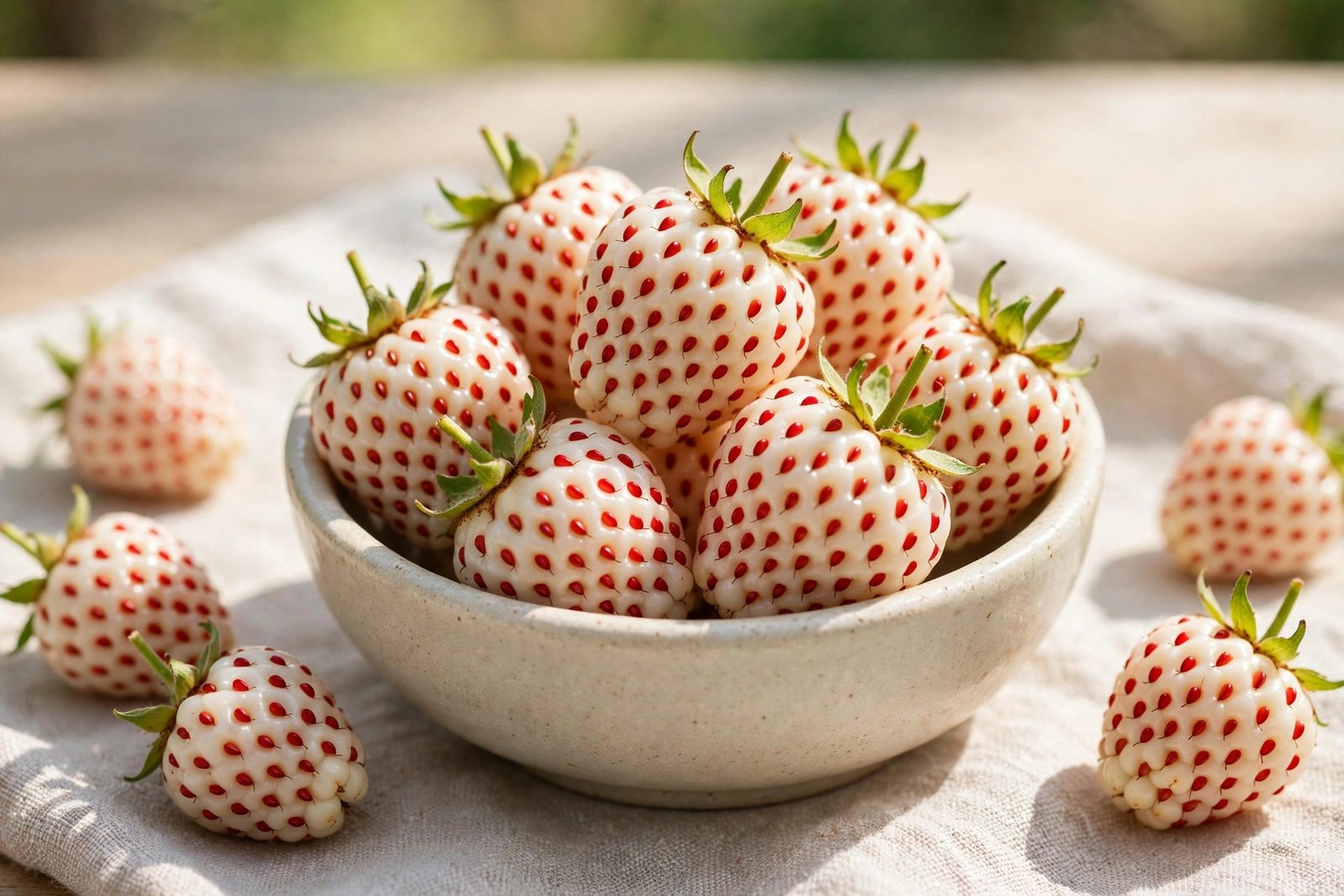
Yes. Pineberries are a cultivated white strawberry variety (white flesh, red seeds, a pineapple-like flavor) — not a separate wild species. They’re as safe as regular strawberries, with the same preparation and portions: wash, hull, cut up, serve plain. Dogs that like strawberries usually like pineberries too — the flavor is milder and slightly tropical.
Wild Berries That ARE Dangerous
This is why the identification rule matters. Some wild berries that look tempting are genuinely toxic to dogs:
- Yew berries: bright red berries on yew shrubs — highly toxic, including the seeds. Emergency vet immediately if eaten.
- Pokeweed berries: dark purple berries in clusters — toxic, causing vomiting, diarrhea, and worse.
- Nightshade berries: black or red berries on nightshade plants — toxic.
- Any berry you can’t name: treat as dangerous until proven otherwise.
If your dog eats an unidentified wild berry, don’t wait for symptoms: call your vet, describe or photograph the plant, and bring a sample if you can do so safely. The emergency steps are here: what happens if a dog eats strawberries.
Can Puppies Eat Wild Strawberries?
With extra caution. Puppies can eat true wild strawberries in tiny amounts (one small berry, mashed), but wild berries are a worse first food than shop-bought ones — you can’t verify washing, sprays, or identification as reliably. For a puppy’s first strawberry, use a washed shop-bought berry instead. Full puppy protocol: can puppies eat strawberries.
Garden Safety: If You Grow Strawberries
- Use pet-safe products only on and around strawberry plants — no chemical pesticides, herbicides, or fertilizers your dog can reach.
- Supervise grazing: most dogs self-limit, but enthusiastic dogs will strip a patch, tops and all. Tops aren’t toxic, but a pile of them means stomach upset: can dogs eat strawberry tops.
- Fence off treated areas until the product’s safety interval has passed, and check every label for pet safety.
For the full safety picture, see our main guide: can dogs eat strawberries, and for fruit combinations your dog will enjoy, see can dogs eat strawberries and blueberries.
Frequently Asked Questions
Are wild strawberries poisonous to dogs?
No — true wild strawberries are safe, just like garden strawberries. The danger is misidentification: some other wild red berries are toxic, so only offer berries you’ve positively identified.
Are mock strawberries poisonous to dogs?
No. Mock strawberries (yellow flowers, bland taste) aren’t toxic, but they’re not a treat either — no real flavor or nutrition, and large amounts can upset a stomach.
Can dogs eat pineberries?
Yes — pineberries are a white strawberry variety, as safe as regular strawberries. Wash, hull, cut up, and serve plain, in the same portions.
Can dogs eat wild berries?
Only berries you’ve positively identified as safe — wild strawberries, blackberries, and raspberries qualify. Unknown wild berries should be treated as dangerous until proven otherwise.
Can puppies eat wild strawberries?
One tiny, mashed, positively identified wild strawberry is fine for a weaned puppy — but a washed shop-bought berry is a safer first taste, since you control washing and identification.
What if my dog ate unknown wild berries?
Don’t wait for symptoms — call your vet, describe or photograph the plant, and bring a sample if safe. If the berries were yew, pokeweed, or nightshade, treat it as an emergency.
Note: this article is general information for dog owners, not veterinary advice. Wild plant identification is genuinely tricky — when in doubt, keep your dog away and ask your veterinarian.