
Yes — dogs can eat strawberries. Strawberries are non-toxic for dogs, low in calories, and packed with vitamins and fiber. But “safe” doesn’t mean “unlimited”: the right portion depends on your dog’s size, the fruit must be washed and cut up, and a few strawberry products (especially anything with xylitol) are genuinely dangerous. This guide gives you the full picture — benefits, exact portions, preparation, and the situations where you should skip strawberries entirely.
The short answer: most healthy adult dogs can enjoy a few strawberries as an occasional treat. Start with half a strawberry, watch for any stomach upset over the next 24 hours, and keep treats — strawberries included — under 10% of your dog’s daily calories.
Are Strawberries Safe for Dogs?
Strawberries are one of the safest fruits you can share with your dog. Unlike grapes and raisins, which are highly toxic to dogs, strawberries contain no compounds known to poison dogs. Veterinary hospitals routinely list them as a dog-safe fruit, and most dogs love the sweet taste.
That said, three things can still cause problems:
- Too many at once — the natural sugar and fiber can cause loose stools or an upset stomach.
- Unwashed fruit — strawberries are often sprayed with pesticides, so always rinse them first.
- Wrong products — strawberry jam, flavored yogurt, and candy are a different story (see the foods-to-avoid section below). Fresh, plain strawberries are what this guide is about.
If your dog has diabetes, pancreatitis, kidney disease, or is on a prescription diet, check with your vet first — the sugar content matters more for these dogs. For everyone else, strawberries are a healthy occasional treat.
Benefits of Strawberries for Dogs
Strawberries earn their place as a treat because they’re genuinely nutritious — about 4 calories per berry, with real nutritional value behind the sweetness:
- Vitamin C and antioxidants: strawberries are rich in vitamin C and anthocyanins, compounds that help protect cells from everyday oxidative stress. (Honest note: dogs make their own vitamin C, so this is a bonus, not something they depend on.)
- Fiber for digestion: the fiber supports healthy bowel movements — but too much fiber at once is exactly what causes runny stools, so portions matter.
- Manganese, folate, and potassium: small amounts of minerals that support bone health, cell growth, and normal muscle and heart function.
- Hydration: strawberries are around 90% water, so they’re a refreshing summer snack.
- Teeth and breath: strawberries contain malic acid, a natural compound that may help reduce surface staining and freshen breath. Chewing a strawberry is not a replacement for brushing — but it’s a nicer bonus than most treats offer.
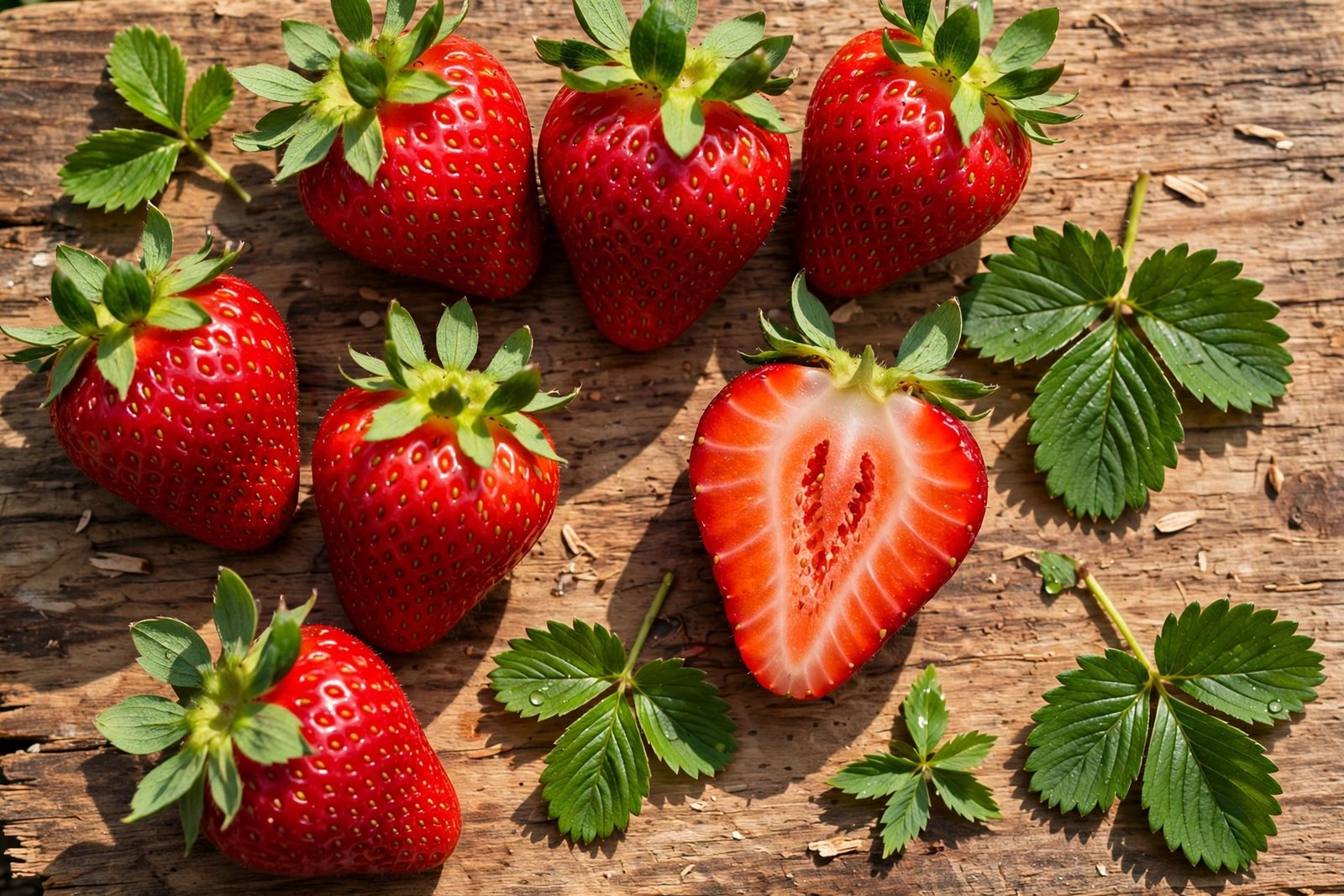
None of this makes strawberries a health food your dog needs. Think of them as one of the better treat options — sweet enough that dogs get excited, light enough that a few berries won’t wreck their diet.
How Many Strawberries Can a Dog Eat?
The 10% rule is the simplest guide: treats of all kinds should stay under 10% of your dog’s daily calories. In strawberries, that works out roughly to:
- Small dogs (under 10 kg): 1–2 small pieces, or about half a strawberry.
- Medium dogs (10–25 kg): 1–2 whole strawberries.
- Large dogs (over 25 kg): up to 4–5 strawberries.
These are occasional-treat amounts, not daily rations — and “every day” isn’t the goal even if your dog begs. For the full breakdown by size, age, and frequency, see our portion guide: how many strawberries can a dog eat.
How to Prepare Strawberries for Dogs (Step by Step)
Preparation takes two minutes and prevents nearly every problem people run into:
- 1. Wash thoroughly under cool running water to remove pesticides and dirt. Organic is a plus, not a requirement.
- 2. Remove the green tops. The leaves and stems aren’t toxic, but they can be a choking hazard and may irritate sensitive stomachs. (Full detail: can dogs eat strawberry tops, stems, leaves, and seeds.)
- 3. Cut into pieces. Halve or quarter the berries — small dogs and enthusiastic gulpers especially need bite-sized pieces.
- 4. Serve plain. No sugar, no cream, no chocolate drizzle. Fresh and plain is the whole recipe.
- 5. First time? Start tiny. Offer half a strawberry, then wait 24 hours. No vomiting, diarrhea, or itching means you’re clear to offer a normal portion next time.
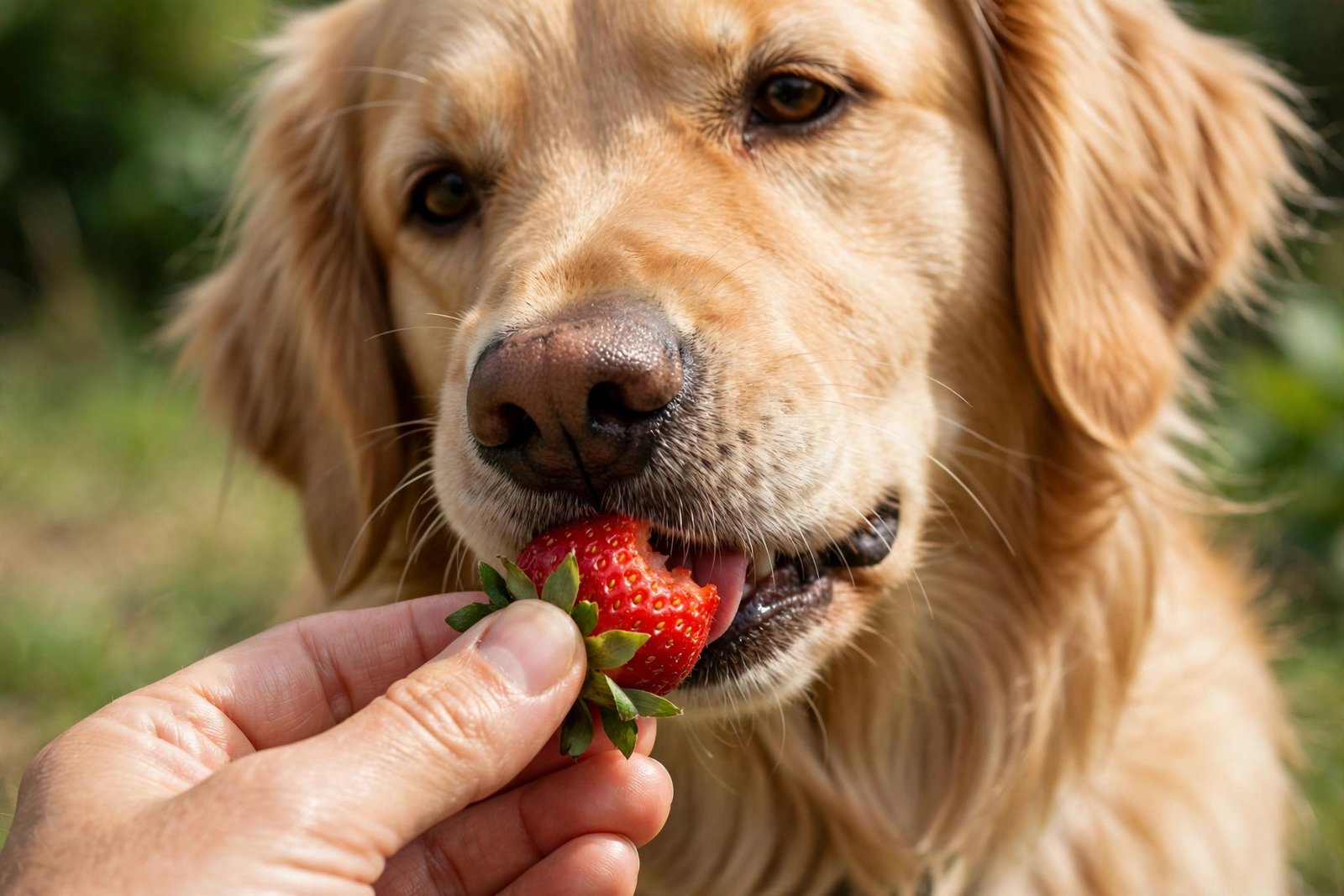
If you enjoy making treats at home, the same “plain and simple” rule applies — our homemade dog food guide follows the same principle: real ingredients, nothing added that a dog doesn’t need.
Can Puppies Eat Strawberries?
Yes, puppies can eat strawberries — in even smaller portions than adults, and only once they’re weaned and eating solid food (usually from around 8 weeks). One small piece, mashed or cut tiny, is plenty for a first taste. Puppies have more sensitive stomachs, so the 24-hour watch after a first taste matters even more. Full guidance: can puppies eat strawberries.
Frozen, Freeze-Dried, or Fresh — Which Form Is Best?
Fresh is the simplest choice, but it’s not the only safe one:
- Frozen strawberries: safe and great in summer — serve them slightly thawed or in small pieces so they aren’t a choking hazard or too hard on teeth.
- Freeze-dried strawberries: safe only if they’re plain with no added sugar. Watch portions extra carefully: freeze-drying concentrates the sugar, so a small handful equals many fresh berries.
- Dried strawberries: usually the worst option — most are sweetened. Skip unless the label says 100% strawberries with nothing added.
Full comparison: can dogs eat frozen strawberries.
Dogs Who Should Be Careful With Strawberries
Most dogs are fine, but be cautious — and ask your vet — if your dog:
- Has diabetes or blood-sugar problems: even natural fruit sugar adds up.
- Has pancreatitis: rich or sugary foods can trigger flare-ups.
- Has a chronic digestive condition (such as IBD or recurring colitis): even a healthy fruit can trigger a flare — get vet approval first.
- Has kidney disease: potassium and overall diet balance matter, so treats need vet approval.
- Is overweight: strawberries are low-calorie, but every treat still counts toward the daily total.
- Is on a prescription diet: therapeutic diets work because they’re precise — random extras, even healthy ones, can undo that precision.
This is general information, not veterinary advice. If your dog has any of these conditions, a quick vet check beats any article — including this one.
Strawberry Allergy vs. Sensitivity: What to Watch For
True strawberry allergy in dogs is rare. What’s more common is a sensitive stomach reacting to too much fruit at once. Either way, stop offering strawberries and call your vet if you see:
- Itching, hives, or facial swelling (possible allergy — treat as urgent if swelling affects breathing).
- Vomiting or diarrhea that lasts more than a day.
- Refusing food or acting lethargic after eating strawberries.
Mild, one-off loose stools after a first taste usually settle on their own within 24 hours — just skip strawberries for a few days and restart with a smaller piece if you try again.
My Dog Ate Too Many Strawberries — What Do I Do?
Don’t panic. If they were plain, fresh strawberries, the most likely outcome is mild stomach upset — loose stools or a gurgly belly for up to a day. Here’s the practical plan:
- Remove any remaining berries and go back to their normal food — no fasting needed for a healthy adult dog.
- Make sure water is available and watch their stools and energy over the next 24 hours.
- Call your vet promptly if vomiting or diarrhea is severe or lasts beyond a day, there’s blood in the stool, or your dog seems distressed or lethargic.
- Moldy fruit, packaging, or desserts: if your dog got into moldy berries, a wrapper, or a strawberry dessert, tell your vet exactly what and how much — bringing the package or ingredient list helps them judge the risk fast. Don’t wait for symptoms if a toxin may be involved.
- Emergency — call immediately if the strawberries came with xylitol (sugar-free gum, candy, or “sugar-free” yogurt): xylitol poisoning is fast and serious, and waiting is the dangerous option.
Strawberry Foods to Avoid
Fresh berries are safe; strawberry-flavored human foods mostly aren’t:
- Strawberry jam and preserves: packed with added sugar.
- Flavored yogurt: often contains added sugar or xylitol — plain, unsweetened yogurt with a little mashed fresh strawberry mixed in is the safe version.
- Strawberry ice cream: sugar, fat, and sometimes xylitol — skip it.
- Whipped cream and syrups: not toxic, but high in sugar and fat with zero benefit.
- Strawberry candy: sugar plus artificial sweeteners — the worst combination on this list.
Dog treats made with strawberry flavor are a different category: they’re formulated for dogs, so they’re fine as long as you follow the pack’s portion guidance.
What About Other Fruits?
If your dog likes strawberries, they’ll probably enjoy blueberries too — and unlike strawberries, blueberries are one of the lowest-sugar fruits around. But not every fruit is safe: grapes and raisins are highly toxic to dogs and should never be shared, even in small amounts. Cherry pits, peach pits, and apple seeds are also hazards, even when the flesh itself is fine. Wild berries are another trap — a wild berry that looks like a safe one can be a toxic variety, so don’t let your dog graze unknown berries. And citrus peels can upset stomachs even when the fruit inside is tolerated. When trying any new fruit, use the same rule as strawberries: wash it, remove stems, pits, and seeds, start small, and watch for 24 hours.
More Strawberry Guides
Every strawberry question has its own detailed guide — pick the one you need:
- How Many Strawberries Can a Dog Eat? Portion Guide by Size
- Can Puppies Eat Strawberries? Safe Age, Portion & Tips
- Can Dogs Eat Strawberry Tops? Stems, Leaves & Seeds Explained
- Can Dogs Eat Frozen Strawberries? Frozen vs Freeze-Dried Guide
- Can Dogs with Kidney Disease Eat Strawberries? Diabetes & Pancreatitis Guide
- Can Dogs Be Allergic to Strawberries? Signs, Side Effects & What to Do
- What Happens If a Dog Eats Strawberries? What to Do Next
- Can Dogs Eat Strawberry Yogurt? Jam, Ice Cream & Cake Explained
- Can Dogs Eat Strawberries and Blueberries? Mixed Fruit Guide
- Can Dogs Eat Wild Strawberries? Wild, Pineberries & Mock Strawberries Explained
- Do Dogs Like Strawberries? Why Dogs Love (or Ignore) Them
Looking for the complete fruit list? See our hub: What Fruits Can Dogs Eat? Safe & Toxic Fruits List.
Frequently Asked Questions
Is strawberry toxic for dogs?
No. Strawberries are non-toxic for dogs. The real risks are overeating (stomach upset), unwashed fruit (pesticides), and strawberry products containing xylitol or added sugar — not the berry itself.
How many strawberries can a dog eat?
As an occasional treat: small dogs about half a strawberry, medium dogs 1–2, large dogs up to 4–5. Keep all treats under 10% of daily calories, and don’t make strawberries a daily habit. See the full portion guide.
Can puppies eat strawberries?
Yes, once they’re weaned and eating solid food — one small, cut-up piece for a first taste, with a 24-hour watch for stomach upset. Details: can puppies eat strawberries.
Do strawberries clean dogs’ teeth?
They may help a little — strawberries contain malic acid, which can reduce surface staining and freshen breath. But they don’t replace brushing or dental chews. Think of it as a small bonus, not dental care.
Can dogs eat strawberry tops?
The green tops aren’t toxic, but they’re a choking hazard and can irritate sensitive stomachs, so remove them before serving. Leaves, stems, and seeds explained: can dogs eat strawberry tops.
Can dogs eat frozen strawberries?
Yes, as long as they’re plain with no added sugar or flavoring. Serve slightly thawed or in small pieces. Freeze-dried is also fine if unsweetened — but portions should be smaller because the sugar is concentrated. Full comparison: can dogs eat frozen strawberries.
What fruit can’t dogs eat?
Grapes and raisins are the big one — they’re toxic even in small amounts. Also avoid cherry pits, peach pits, and apple seeds. Citrus in large amounts can upset stomachs too. When in doubt about any fruit, check before sharing.
What should I do if my dog ate a whole punnet of strawberries?
For plain fresh strawberries, expect possible mild stomach upset for up to a day — keep water available, feed normally, and watch stools and energy. Call your vet if vomiting or diarrhea is severe, lasts beyond a day, or your dog seems distressed. If xylitol was involved, call your vet or an emergency clinic immediately.
Note: this article is general information for dog owners, not veterinary advice. If your dog has a health condition or reacts badly to a new food, your veterinarian is the right person to ask.