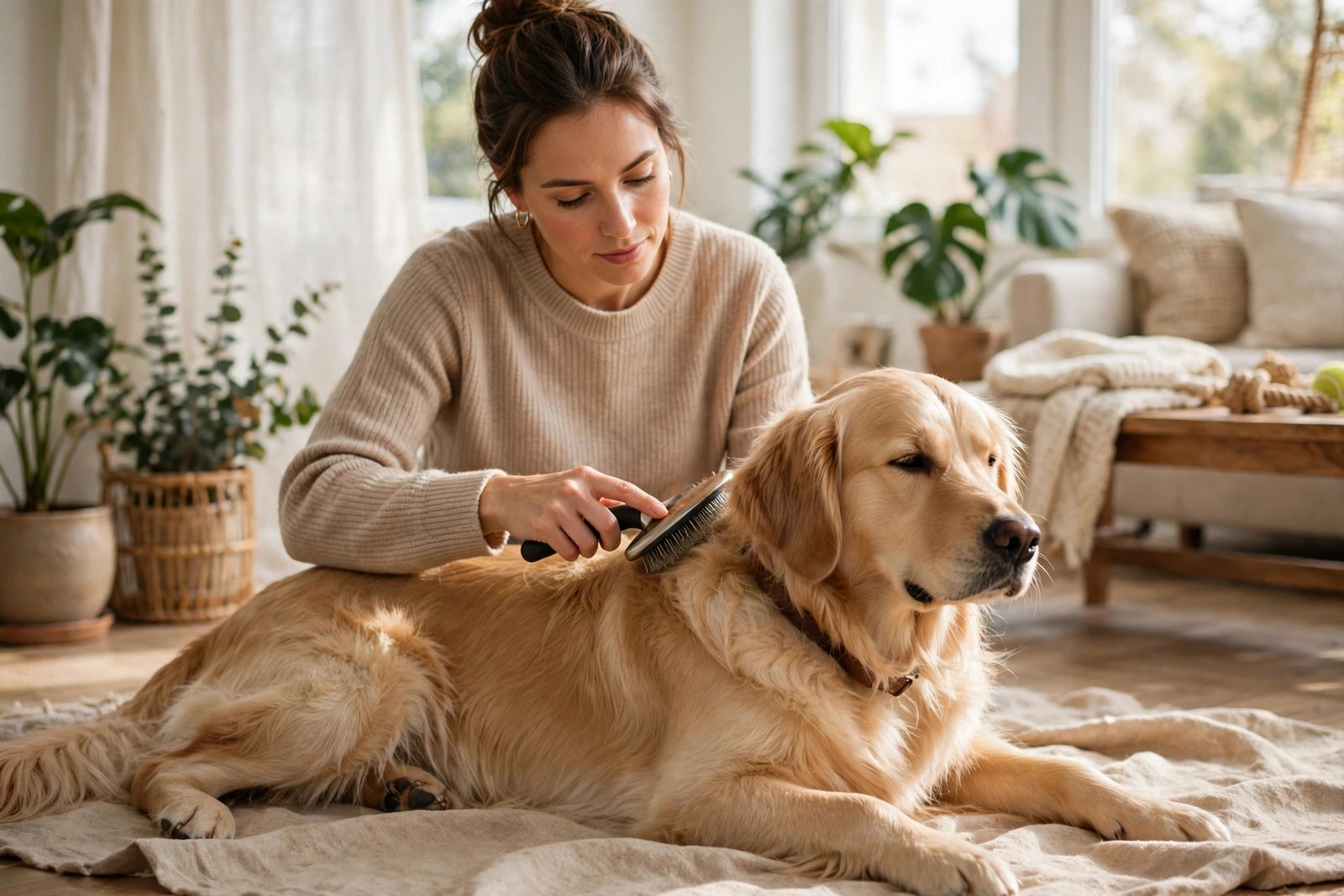
Dog grooming at home for beginners is easier — and cheaper — than most new owners expect. You don’t need a professional setup: with a handful of tools and one calm routine, you can handle brushing, bathing, nail trims, ear cleaning and teeth, catch health issues early, and save hundreds per year. This guide gives you the exact beginner routine: the tools, coat-type differences, the order of operations, how often to do each task, seasonal shedding survival, and the mistakes that send beginners running back to the groomer.
The Beginner Grooming Toolkit
Start with these — nothing fancy, no $200 dryer needed on day one:
- Slicker brush (most coats) or undercoat rake (heavy shedders like Huskies, Shepherds, Retrievers)
- Steel comb — the truth-teller: if the comb snags, there’s a tangle the brush missed
- Dog shampoo — never human shampoo; the pH is wrong for dog skin and causes itching
- Nail clippers (guillotine or scissor style) plus styptic powder for accidents
- Ear cleaner — vet-approved, plus cotton balls (never Q-tips deep in the canal)
- Dog toothbrush + enzymatic toothpaste — dental disease is the most common and most ignored dog health issue
- Towels — more than you think. Then one more.
- High-value treats — grooming should predict good things, every single time
Know Your Coat Type: Not All Dogs Groom the Same
- Short/smooth (Beagle, Boxer): weekly rubber-brush wipe-down, minimal bathing. Easiest.
- Double coat (Husky, Golden, Shepherd): 2–3× weekly brushing with undercoat rake; NEVER shave (the coat regulates temperature both ways).
- Long/silky (Yorkie, Maltese): daily brushing to prevent mats; regular trims around eyes, paws, sanitary areas.
- Curly/wavy (Poodle, Doodles): daily brushing + professional clipping every 6–8 weeks; mats hide in curls and tighten fast.
- Wire (Terriers): hand-stripping or clipping to maintain texture; brushing 2× weekly.
- Hairless (Xolo, Chinese Crested): skincare instead — sunscreen, moisturizing, acne care.
When in doubt about your mix’s coat, ask a groomer once — one $10 consultation saves months of wrong tools.
The At-Home Grooming Routine, Step by Step
Order matters. Do it in this sequence every time and it becomes a calm ritual instead of a wrestling match:
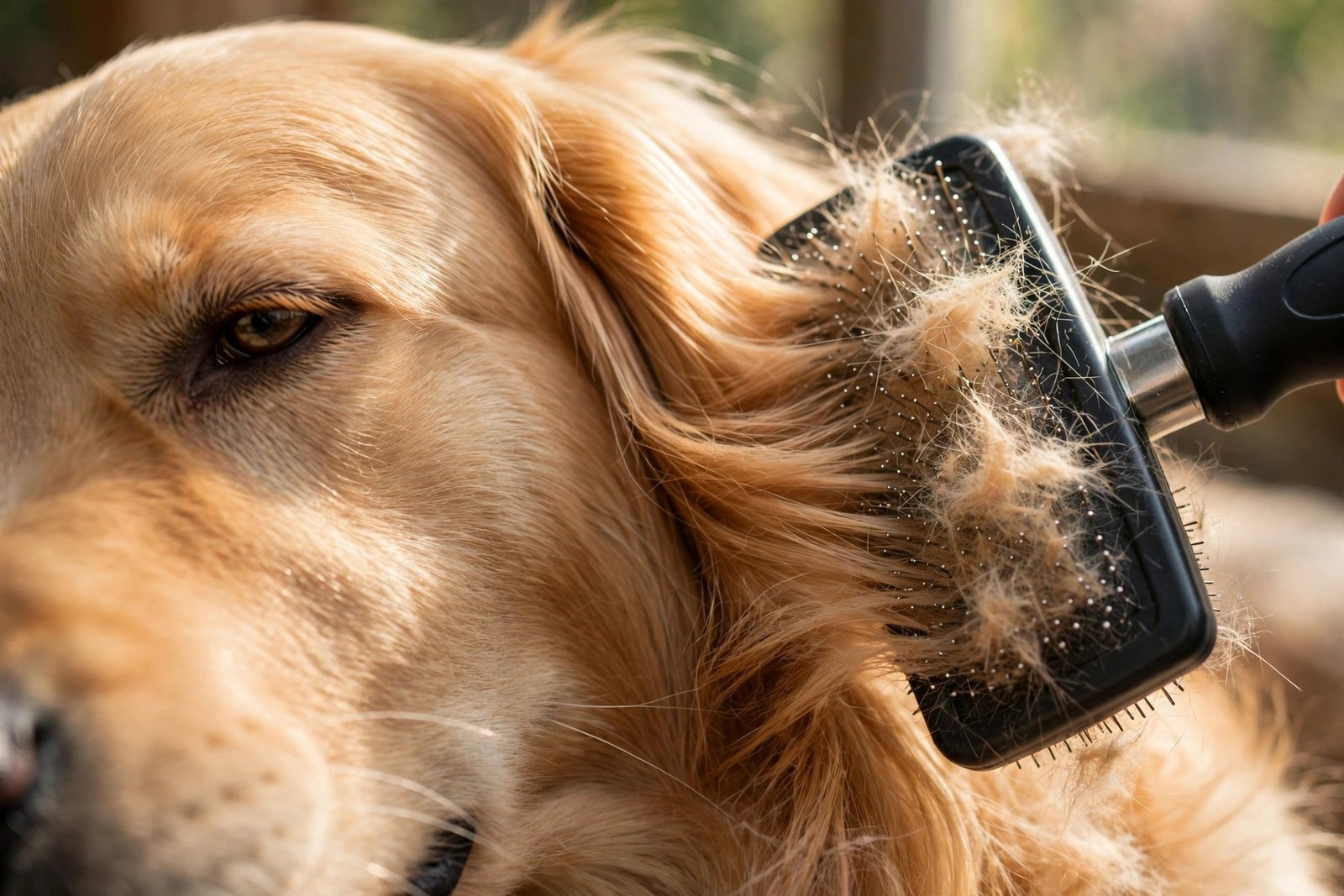
1. Brush first, always. Work through the coat in sections, down to the skin. Brushing a dirty, tangled coat before bathing prevents mats from tightening into felt. Finish with the steel comb check. Ten unhurried minutes.
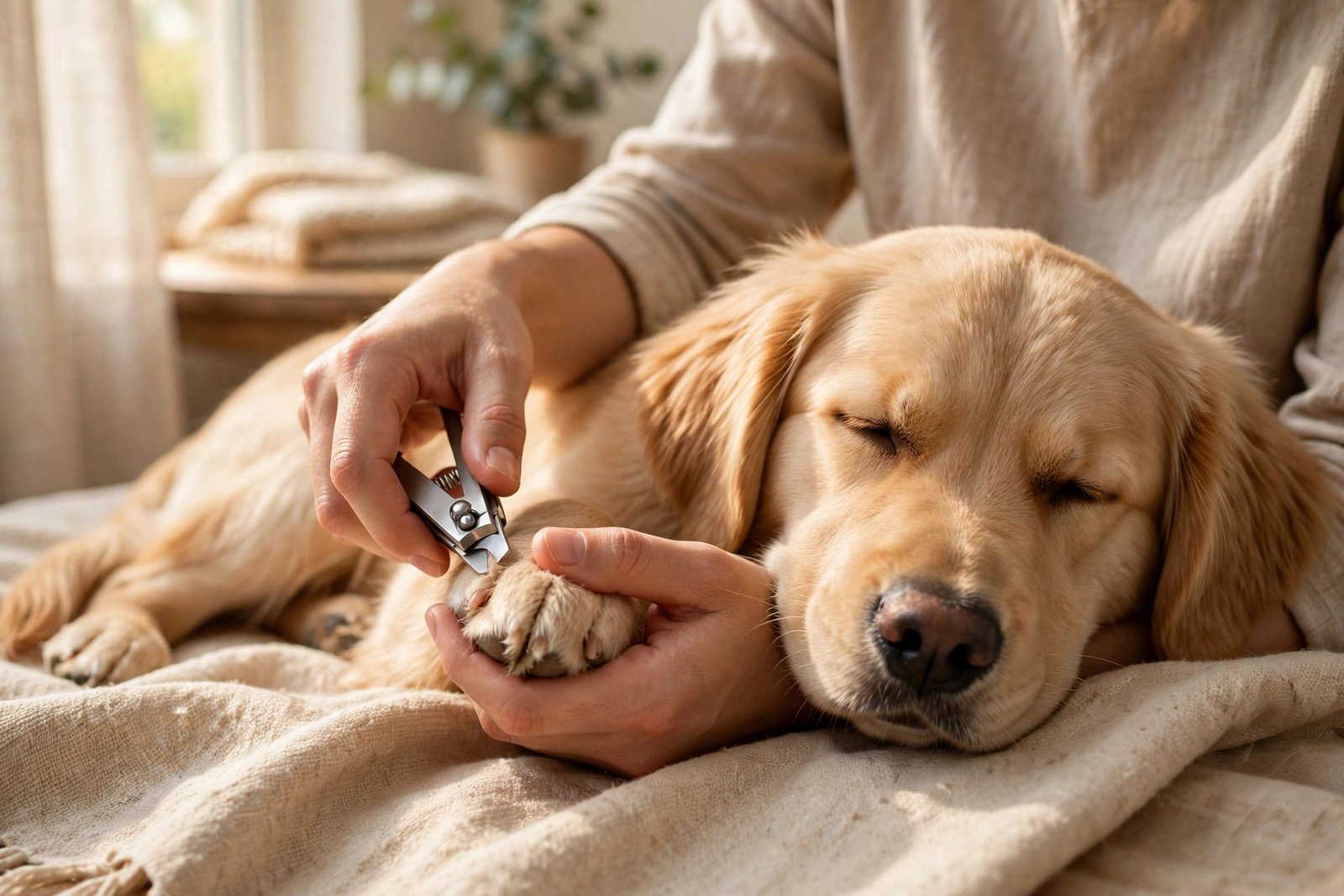
2. Nails second. Trim small amounts, watching for the quick (the pink blood vessel inside the nail). On dark nails, take thin slices until you see a grey oval appear — then stop. If your dog panics, do one paw a day. No shame in slow.
3. Ears third. Fill the canal with cleaner, massage the base for 20 seconds, let them shake, wipe the visible folds with a cotton ball. Redness, odor or dark discharge = vet visit, not deeper cleaning.
4. Teeth fourth. Pea-sized enzymatic toothpaste, brush the outer surfaces in circles. Even 30 seconds several times a week beats nothing — 80% of dogs show dental disease by age 3.
5. Bath last. Lukewarm water, dog shampoo worked from neck to tail (not the face — use a damp cloth there), rinse until the water runs completely clear. Leftover shampoo = itchy dog.
6. Dry thoroughly. Towel-dry, then air-dry in a warm room or low-heat dryer held at distance. Damp undercoats in winter invite skin trouble.
How Often Should You Groom? (The Schedule)
- Brushing: 2–3× per week (daily for heavy shedders and long/curly coats)
- Bathing: every 4–6 weeks, or when actually dirty — overbathing strips natural oils and causes the very itching people bathe to fix
- Nails: every 3–4 weeks (if you hear clicking on hard floors, they’re overdue)
- Ears: check weekly, clean as needed — floppy-eared breeds (Cocker, Basset) need more
- Teeth: several times a week minimum; daily is the gold standard
The Seasonal Shedding Survival Guide
Spring and fall “coat blow” buries houses in fur. Survive it:
- Brush daily during blow season — 10 minutes prevents 10 tumbleweeds.
- Bathe + high-velocity dry: a bath loosens dead coat; drying (even with a regular dryer on cool, at distance) blasts it out. This one combo removes more fur than a week of brushing.
- Omega-3s: fish oil in the diet reduces excessive shedding over 4–6 weeks (see our homemade dog food guide for coat-supporting nutrition).
- Robot vacuum: not a joke — the single best quality-of-life purchase for double-coat owners.
- When shedding is abnormal: sudden bald patches, greasy skin, or non-seasonal heavy loss = vet visit (thyroid, allergies, Cushing’s).
Puppy’s First Groom: The Desensitization Plan
Don’t wait until the puppy “needs” grooming — by then it’s a fight. Start at 8–10 weeks with handling games:
- Week 1: touch paws, ears, mouth + treat. Just handling, no tools.
- Week 2: introduce the brush — one stroke, treat. The running dryer from across the room + treats.
- Week 3: lift each paw, touch the clipper to the nail (no cut) + treat. Toothbrush touch + tasty toothpaste.
- Week 4+: one tiny real nail trim, one short brushing session — always ending before fussing starts.
Goal: by 4 months, grooming predicts treats. Ten minutes of prevention now saves years of wrestling.
Beginner Mistakes That Cause Real Problems
- Bathing a matted dog: water tightens mats into felt. Brush or cut them out first — or see a pro.
- Cutting nails too short: one bloody quick can make a dog fear nail trims for a year. Go slow; styptic powder on hand.
- Human shampoo: wrong pH, dries and irritates dog skin. This causes a shocking amount of “mystery itching.”
- Marathon sessions: a stressed dog learns to hate grooming. Short, treat-filled sessions win — quit while you’re ahead.
- Ignoring stress signals: lip licking, yawning, whale eye — learn these in our dog behavior guide and respect them mid-groom.
- Shaving a double coat: it doesn’t keep them cooler — it destroys insulation and sun protection, and often grows back patchy.
DIY vs Professional: The Honest Cost Breakdown
- Full DIY: ~$60–100 in tools, then ~$0 per session. Brushing, bathing, nails, ears, teeth — all learnable.
- Hybrid (recommended): DIY maintenance + pro every 8–12 weeks for cuts and deep de-shedding. ~$200–400/year.
- Full pro: $50–120 per session × 6–8/year = $400–900/year, before tips.
Even if you go full pro, learn nails and brushing at home — they’re the highest-frequency tasks and the easiest wins.
When to Call a Professional (No Shame)
DIY has limits, and knowing them is part of good ownership: severe matting (dematting hurts — a pro will clip it out kindly), breed-specific cuts, black nails you can’t read, or a dog whose anxiety escalates despite gradual work. A good groomer is a teammate, not an admission of failure. Ask for a “cooperative care” groomer if your dog is fearful — they’re trained to work with anxiety, not against it.
FAQs
How do I groom my dog for the first time?
Start with just brushing and treats — no bath, no nails. Let the first session be 10 easy minutes that end with a jackpot reward. Add one new task per session from there. The desensitization plan above is your roadmap.
Can I groom my dog at home or do I need a groomer?
Routine care — brushing, bathing, nails, ears, teeth — is absolutely DIY-able for most dogs. Complex cuts, severe mats and highly anxious dogs are pro territory. The hybrid approach (DIY maintenance + pro cuts) suits most owners best.
What calms a dog during grooming?
Short sessions, a non-slip surface, calm voice, lick mats with peanut butter, and ending before stress escalates. For genuinely fearful dogs, ask your vet about anti-anxiety options — there’s no prize for white-knuckling it, and a calm dog learns faster.
How do I cut black nails safely?
Take thin slices and watch the cut surface: you’ll see a grey/white oval appear just before the quick — stop there. In doubt, trim less and do it more often. A Dremel-style grinder is even more forgiving for black nails.
Does diet affect my dog’s coat?
Hugely. Omega-3s and quality protein show up in the coat within 4–6 weeks. If the coat is dull despite good grooming, look at the food bowl — our homemade dog food guide covers coat-supporting nutrition in detail.
How do I get mats out without hurting my dog?
Small mats: work cornstarch into the mat, hold the base (so you’re not pulling skin), and tease apart with a comb from the ends inward. Large or tight mats: clip them out with blunt-tipped scissors (slide a comb between mat and skin as a guard) or see a groomer. Never bathe a matted dog first.
My dog hates the dryer. What do I do?
Desensitize gradually: dryer off + treats, then on across the room + treats, then closer over sessions. Or skip the dryer — thorough towel-drying plus air-drying in a warm room works for most coats. Never use high heat; dogs overheat faster than you think.