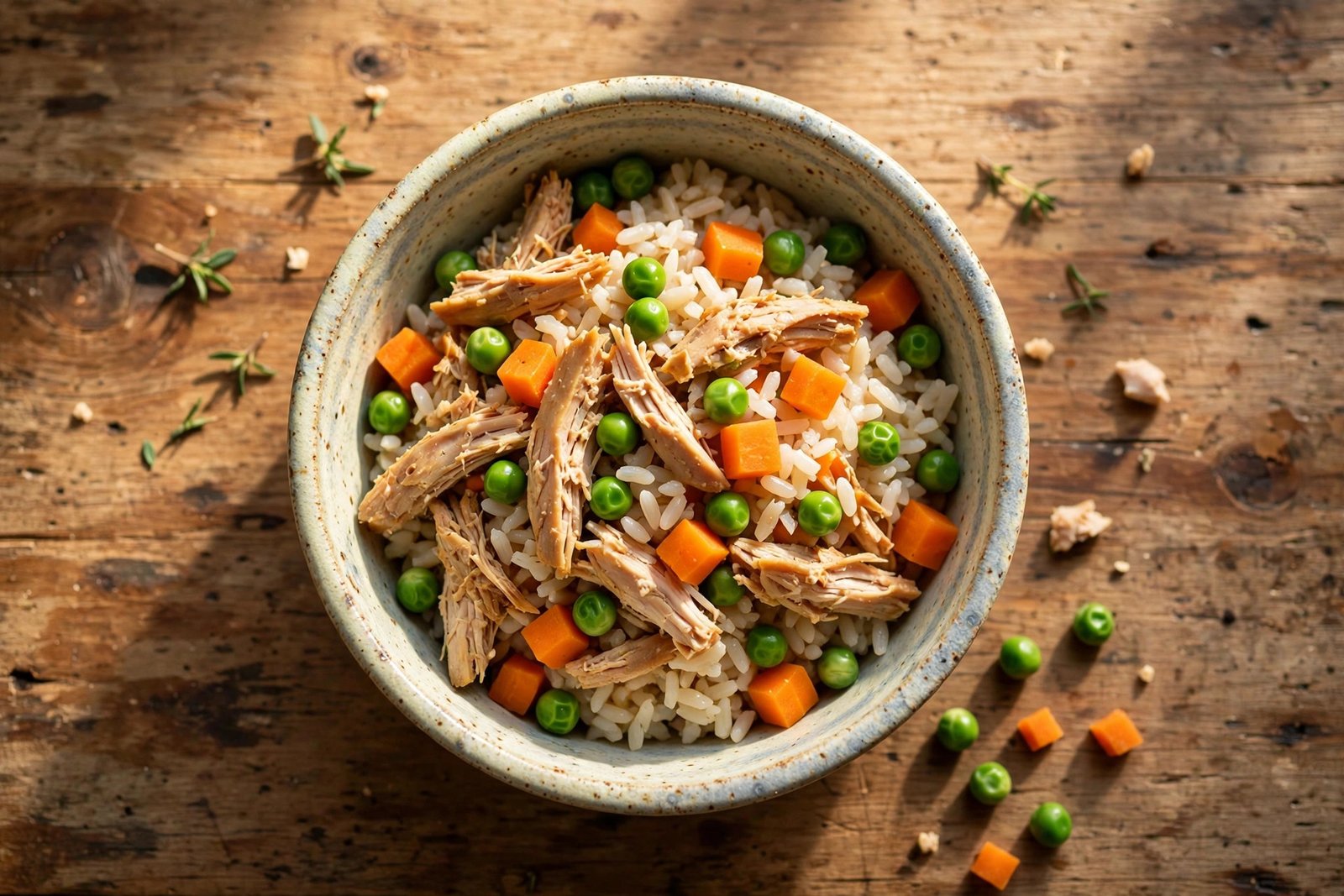
More owners than ever are cooking for their dogs — but good intentions don’t equal balanced nutrition. These homemade dog food recipes, vet-approved in their formulation principles, give you a safe starting framework: the right nutrient ratios, three balanced recipes, exact portion guidance, life-stage adjustments, a weekly meal-prep system, and the toxic foods to never touch.
Important: this is general information, not veterinary advice. Before switching your dog’s diet — especially for puppies, seniors, or dogs with health conditions — talk to your vet. An unbalanced homemade diet can cause real harm over time, and “natural” doesn’t automatically mean “complete.”
Can You Feed Your Dog Homemade Food Safely?
Yes — if it’s complete and balanced, every single day. Dogs need the right proportions of protein, fat, carbohydrates, vitamins and minerals daily, not “on average this week.” The most common homemade-diet mistakes are: too little calcium, no organ meat variety, skipping supplements entirely, and eyeballing portions. A recipe isn’t sound because a blog says so — it’s sound when it meets established nutrient profiles (like AAFCO guidelines) and your vet signs off on it for your dog.
Homemade vs Kibble vs Raw: Honest Comparison
- Quality kibble: complete, convenient, consistent, affordable. The unsexy winner for most owners. Choose brands with feeding trials and veterinary nutritionists on staff.
- Homemade: total ingredient control, great for allergies and picky eaters — but YOU become the nutritionist. Requires vet supervision and real effort to balance.
- Raw/BARF: passionate advocates, thin evidence, real risks (bacterial contamination for dogs and humans, unbalanced ratios, broken teeth on bones). Most veterinary nutritionists don’t recommend it.
- Fresh commercial (Farmer’s Dog style): homemade convenience without the formulation risk — but at 3–4× kibble prices.
People cook for control and freshness, not savings or proven superiority. Be honest about your motivation — it determines whether you’ll stick with it.
The Building Blocks of Balanced Homemade Dog Food
- Protein (the base): chicken, turkey, lean beef, fish, eggs. Roughly 40–50% of the meal by calories. Rotate proteins for amino acid variety.
- Organ meat (5–10%): liver and kidney are nature’s multivitamins — small amounts, big nutritional payoff. Don’t skip these.
- Carbohydrates: brown rice, sweet potato, oats, pumpkin. Energy plus fiber for gut health.
- Vegetables: carrots, green beans, spinach, peas, blueberries. Vitamins, antioxidants and bulk.
- Healthy fats: fish oil or flaxseed for omega-3s — essential for skin, coat, brain and joints.
- Calcium: the #1 missing piece in DIY diets. Crushed eggshell powder (½ tsp per ~500g food) or a vet-recommended calcium supplement — plain meat + rice alone will cause skeletal deficiencies within months.
Recipe 1: Chicken & Rice Staple (Adult Maintenance)
- 500g boneless skinless chicken thigh, cooked and diced (thigh > breast: more nutrients, better price)
- 50g chicken liver, cooked and minced
- 200g cooked brown rice
- 100g cooked carrots + peas
- 1 tablespoon fish oil
- ½ teaspoon finely ground eggshell powder (or calcium per your vet’s dosage)
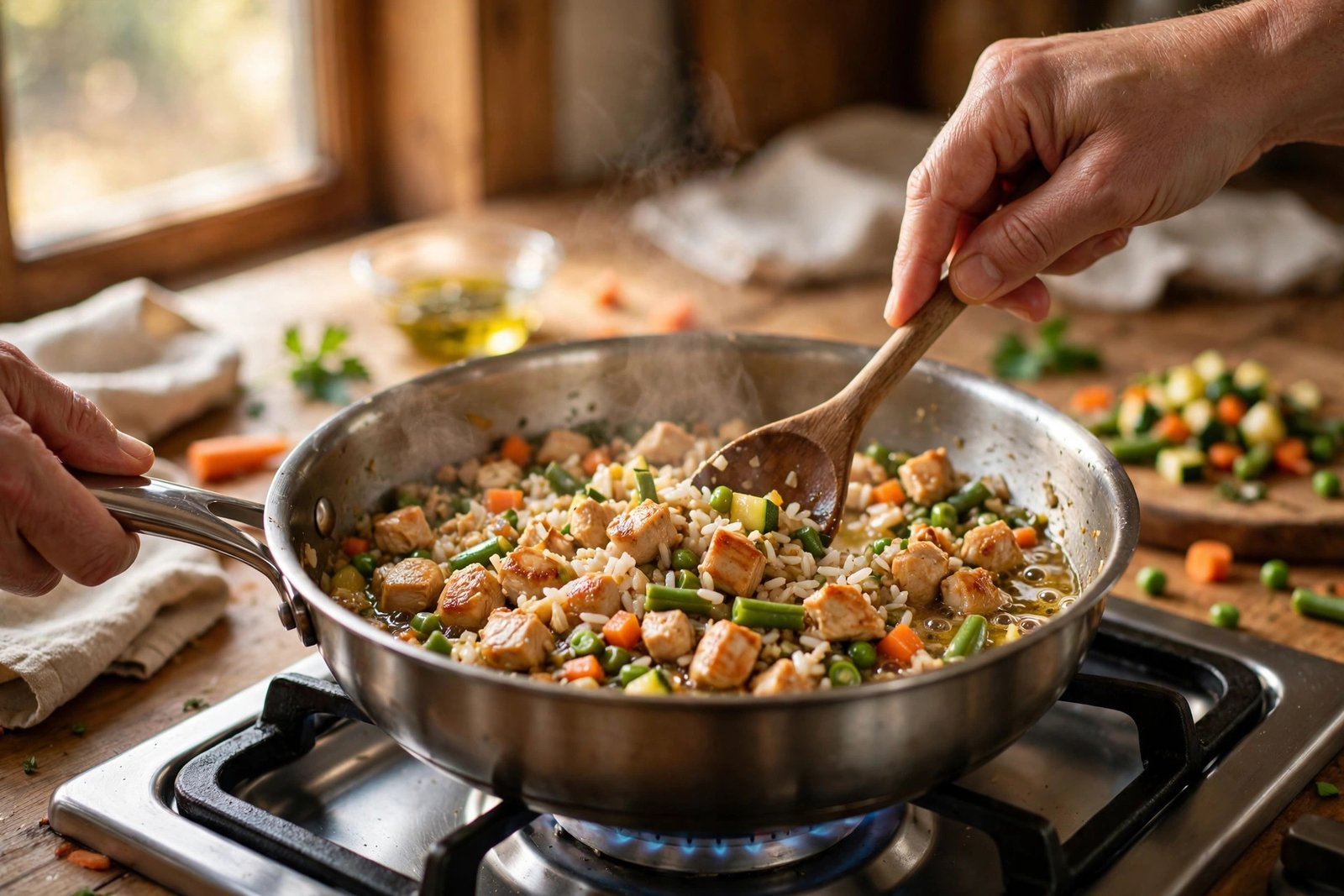
Cook components separately, combine, cool, portion into daily servings. Refrigerate up to 3 days or freeze up to 2 months.
Recipe 2: Turkey & Sweet Potato (Sensitive Stomachs)
- 500g lean ground turkey, cooked and drained
- 50g turkey liver, cooked and minced
- 250g mashed sweet potato
- 100g steamed green beans
- 1 tablespoon olive oil
- ½ teaspoon finely ground eggshell powder (or calcium per vet guidance)
Gentle, low-fat, easy to digest — a good first homemade recipe for dogs with touchy stomachs or recovering from GI upset (with vet approval).
Recipe 3: Fish & Oat Brain Food (Seniors Love It)
- 400g cooked salmon or sardines (boneless — check carefully)
- 200g cooked oatmeal
- 100g steamed spinach or kale
- 50g blueberries
- 1 tablespoon fish oil (extra DHA for aging brains)
- ½ teaspoon finely ground eggshell powder (or calcium per vet guidance)
Rich in omega-3s and antioxidants that support cognitive health — pair it with our senior dog dementia care guide if your old friend is slowing down mentally.
Portion Guide: How Much Homemade Food?
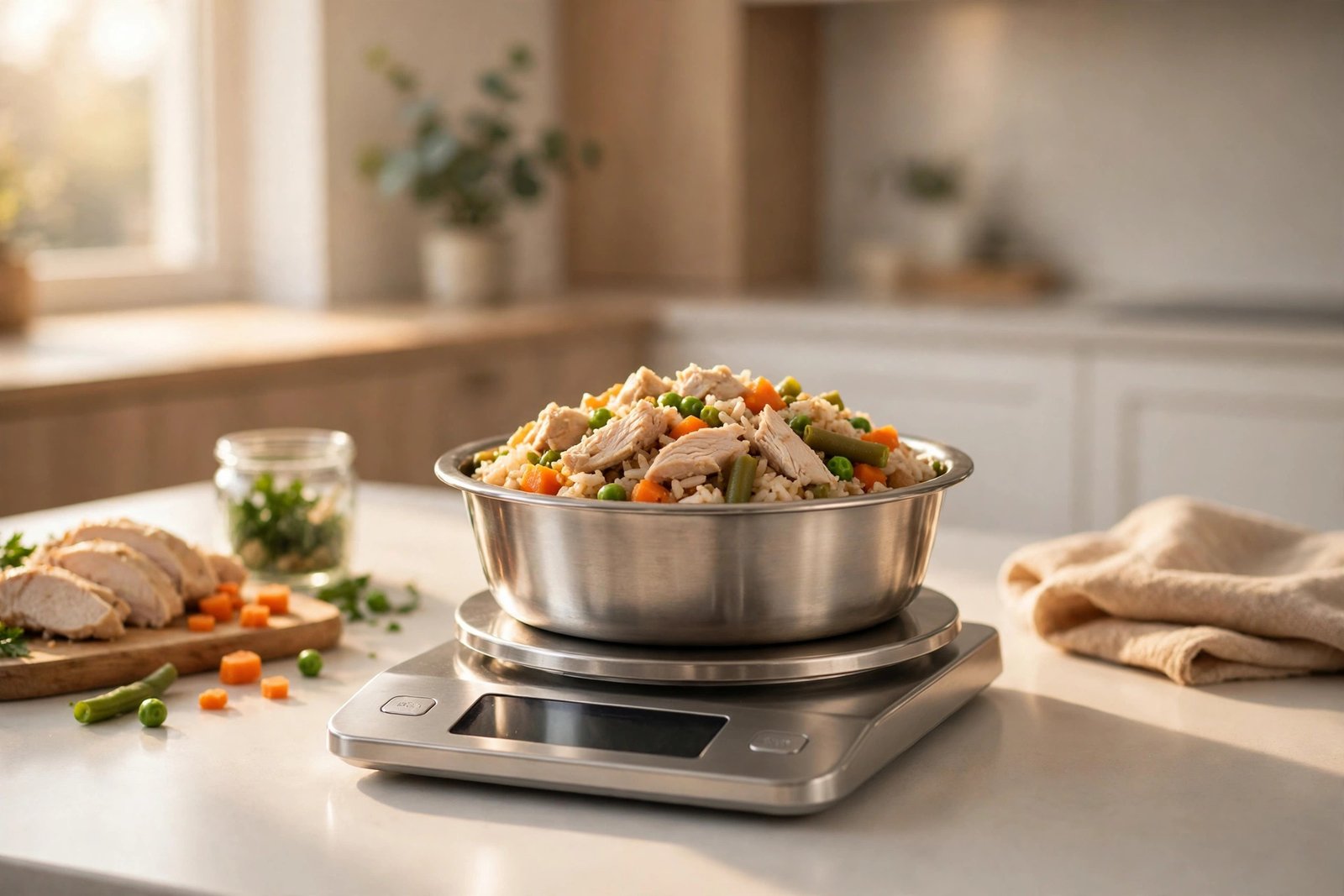
As a starting point, most adult dogs need about 2–3% of their body weight in food per day (split into two meals). A 20kg dog ≈ 400–600g daily. Then adjust by body condition: ribs easily felt but not seen is the target; visible waist from above. Puppies, athletes and nursing mothers need more (up to 4–5%); couch-potato seniors need less. Weigh your dog monthly and adjust — the scale doesn’t lie, but your eyes do.
Life-Stage Adjustments
- Puppies: do NOT DIY without a veterinary nutritionist. Growth-stage calcium/phosphorus ratios are precise, and large-breed puppies are especially vulnerable to developmental orthopedic disease from imbalances. This is non-negotiable.
- Adults: the recipes above, adjusted for activity. Working/sport dogs may need 30–50% more calories with higher fat.
- Seniors (7+): slightly fewer calories, more protein (to fight muscle wasting — the opposite of old advice), joint-supporting omega-3s, softer textures for dental issues.
The Weekly Meal-Prep System
The reason most people quit homemade: daily cooking burnout. The fix is batch cooking:
- Sunday (90 min): cook a week’s proteins, grains and veg in bulk. Cool completely.
- Portion: into daily containers (or twice-daily). Add fish oil and eggshell powder fresh at serving (oils oxidize).
- Freeze half: thaw overnight in the fridge. Never microwave from frozen and serve hot — mix to room temp.
- Track: a simple notebook of recipe + portions + your dog’s weight and stool quality. Boring, invaluable.
Toxic Foods: Never Feed These
- Chocolate, coffee, caffeine — theobromine poisoning; darker = deadlier
- Grapes and raisins — kidney failure, even in small amounts, even once
- Onions and garlic (all forms, including powder) — damages red blood cells; toxicity is cumulative
- Xylitol/birch sugar (sugar-free products, some peanut butters) — rapidly fatal; check every label
- Macadamia nuts, alcohol, cooked bones (splinter), raw dough (expands) — all dangerous
Common Myths Debunked
- “Dogs can’t digest grains.” False — dogs evolved amylase genes alongside humans. Most digest cooked grains fine; true grain allergies are rare (protein allergies are the common ones).
- “Homemade is automatically healthier.” Only if balanced. An unbalanced homemade diet is worse than mid-tier kibble.
- “Vets are paid to push kibble.” Vets push balanced nutrition because they treat the deficiencies. Ask yours to review your recipe — most will, gladly.
- “My dog loves it, so it must be complete.” Dogs love chocolate too. Enthusiasm isn’t a nutrient panel.
Switching to Homemade: The 7–10 Day Transition
Never switch cold turkey. Mix increasing amounts of the new food into the old over 7–10 days (25/75 → 50/50 → 75/25 → 100%). Watch stools — soft but formed is fine; watery means slow down a step. And keep training treats small and consistent during the switch so you’re not changing two variables at once.
FAQs
Do vets recommend homemade dog food?
Many vets are fine with it if the recipe is nutritionally complete and they approve it for your specific dog. What vets warn against is winging it — meat and rice alone is not a complete diet, and they see the deficiency cases. Bring your recipe to your next checkup.
Is homemade dog food cheaper than kibble?
Usually not — quality meat costs more than quality kibble per calorie. Expect roughly 1.5–2× your kibble spend, plus your time. People cook for control and freshness, not savings. If budget is the driver, a good kibble beats a cheap homemade diet.
Can puppies eat homemade food?
Only with veterinary nutritionist supervision. Puppies — especially large and giant breeds — have precise calcium, phosphorus and calorie needs, and mistakes during growth cause permanent orthopedic damage. Don’t DIY puppy nutrition from a blog recipe, including this one.
How long does homemade dog food last?
3 days refrigerated, 2–3 months frozen in portioned containers. No preservatives means no pushing it — when in doubt, throw it out. Add fish oil fresh at serving, not before freezing.
What supplements does homemade dog food need?
At minimum: calcium (meat is phosphorus-heavy without it) and omega-3s. Many vets also recommend a canine multivitamin formulated for homemade diets, vitamin E, zinc, and iodine (kelp). Your vet should tailor this to your exact recipe — bring the ingredient list.
Can I feed my dog a vegetarian homemade diet?
Dogs are omnivores and can survive on carefully formulated vegetarian diets, but it’s significantly harder to balance (protein quality, taurine, B12, carnitine all need attention). This absolutely requires veterinary nutritionist formulation — don’t improvise it.
How do I know if the diet is working?
Track four things monthly: weight (stable and lean), coat (shiny, minimal shedding beyond normal), stools (firm, consistent), and energy (appropriate for age). Annual bloodwork confirms what eyes can’t see. Any drift — adjust with your vet, don’t guess.