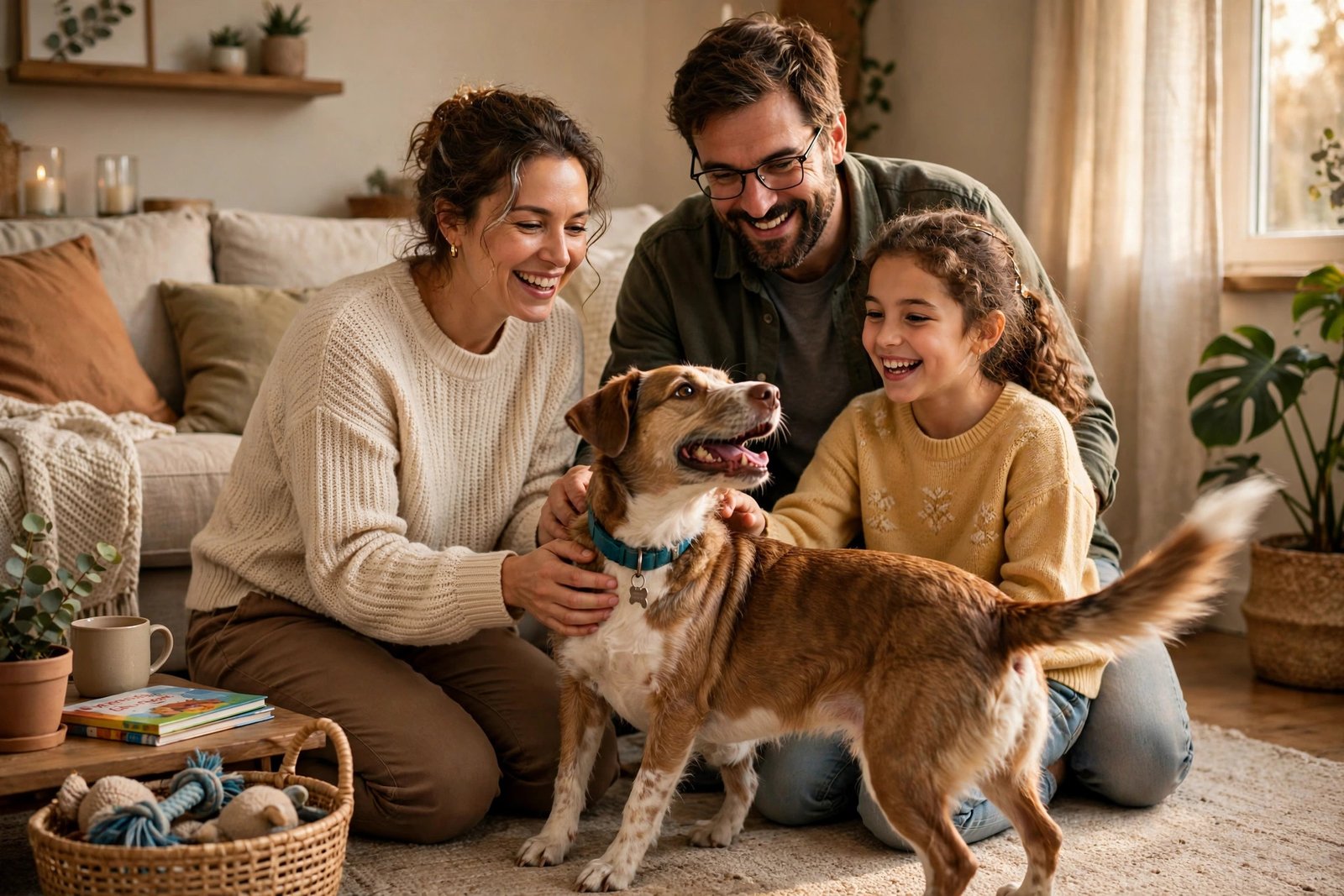
Adopting a dog for the first time is one of the best decisions you’ll ever make — and one of the most overwhelming weeks you’ll ever live through. This guide walks you through everything: deciding if you’re ready, shelter vs rescue vs breeder, the real costs, the supplies checklist, the adoption process, the crucial first 24 hours, the 3-3-3 adjustment rule, introducing existing pets, and the red flags to watch for.
Are You Ready to Adopt? The Honest Checklist
Be brutally honest with yourself before you fall for a shelter photo:
- Time: dogs need 1–3 hours of your active attention daily — walks, training, play — for 10–15 years. Not “most days.” Every day.
- Money: budget for food, vet care, vaccinations, spay/neuter, grooming, and an emergency fund. The adoption fee is the cheapest part of dog ownership.
- Lifestyle fit: a high-energy border collie in a studio apartment with a 60-hour work week is a mismatch waiting to happen. Match the dog’s energy to your real life, not your ideal life.
- Housing stability: landlords, future moves, travel plans — dogs complicate all of them. Have a plan, not a hope.
- Household agreement: everyone under the roof should be on board — including existing pets, whose lives you’re about to upend.
If any of these make you wince, consider fostering first. It’s a trial run that saves lives either way.
Shelter vs Rescue vs Breeder: Where Should Your Dog Come From?
- Municipal shelter: lowest fees ($50–200), dogs need homes urgently, less known about history. Best for flexible, experienced-ish adopters.
- Breed-specific rescue: deep breed knowledge, foster-based (so you learn the dog’s real personality), thorough vetting of you. Best for breed lovers who want support.
- Reputable breeder: health-tested parents, known lineage, lifetime take-back guarantee. Only if you need predictability (allergies, specific traits) — and verify ruthlessly.
- Pet stores / online “breeders” shipping puppies: almost always puppy mills. No exceptions worth gambling on.
There’s no moral hierarchy between good shelters, good rescues, and good breeders — there’s just good sources and bad ones.
The Real Cost: First-Year Budget Breakdown
Adoption fees ($50–500) are the down payment, not the price. A realistic first year for a medium dog:
- Adoption fee: $50–500 (often includes spay/neuter, vaccines, microchip)
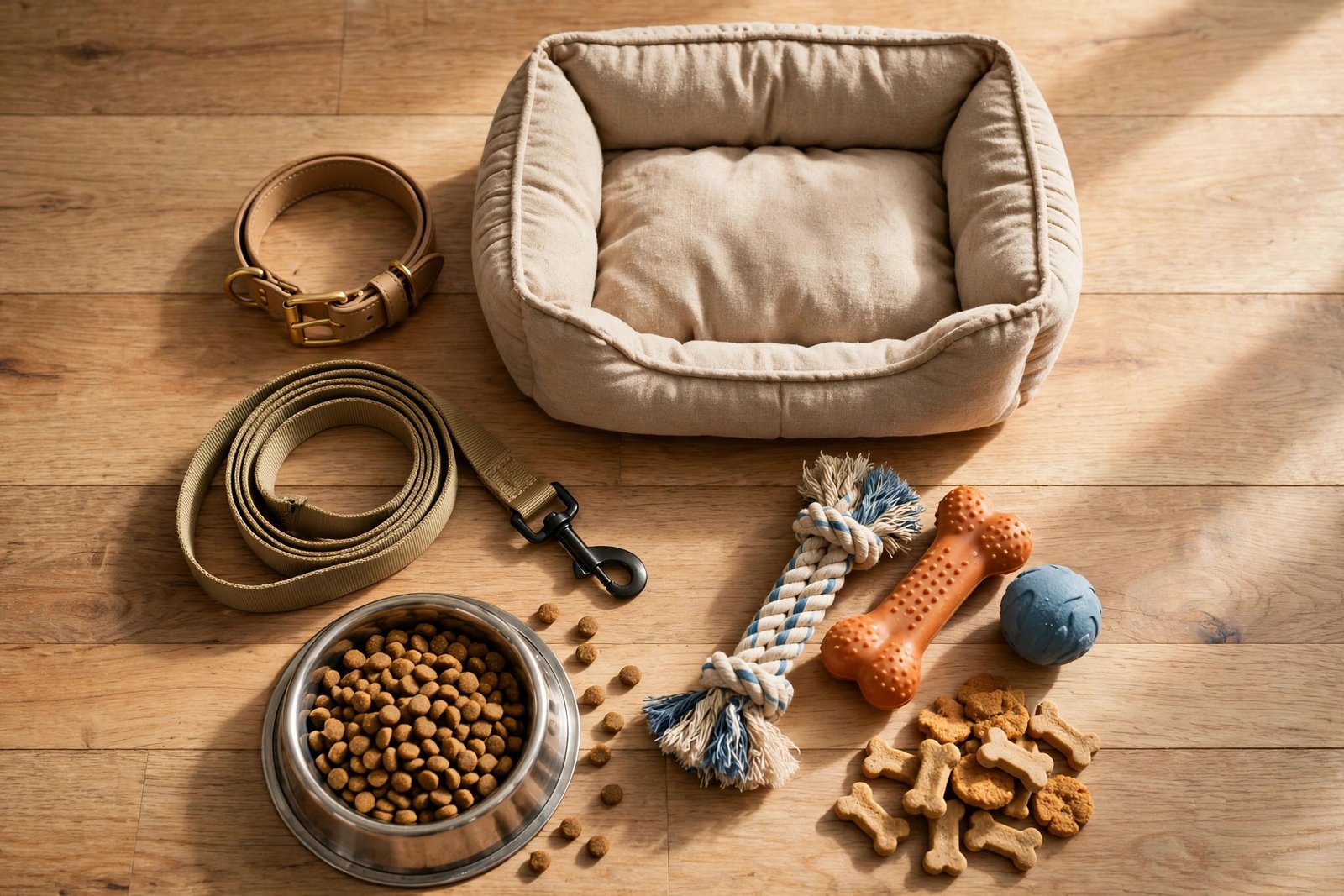
- Supplies (one-time): $150–300 — crate, bed, bowls, collar, leash, toys, gates
- Food: $400–800/year depending on size and quality
- Vet (routine): $300–600 — checkups, boosters, flea/tick/heartworm prevention
- Training: $150–400 — at least one group class; the best money you’ll spend
- Emergency fund: $1,000 minimum, untouched. One swallowed sock can cost $3,000.
Realistic first-year total: $2,000–4,000. If that number scares you, you’re not ready — and that’s okay to admit now rather than at the emergency vet.
First-Time Dog Adoption Supplies Checklist
Get these before pickup day:
- Food (ask the shelter what they’ve been eating — switch gradually over 7–10 days)
- Food and water bowls (stainless steel — no plastic acne), collar, ID tag with your number, 6-foot leash
- Crate or bed in a quiet corner — their safe zone from hour one
- A few toys (not twenty; let them choose favorites — most dogs pick one)
- Enzyme cleaner for accidents (there will be accidents — regular cleaner doesn’t remove the scent marker)
- Baby gates if you need to limit space at first
- Chew options: Kong, bully sticks, lick mat — a bored new dog invents their own entertainment
The Adoption Process: What to Expect
Most shelters and rescues follow a similar path: application, interview or home check, meet-and-greet (bring existing dogs and all family members), then paperwork and fee. It can take hours or weeks — rescues are slower because they’re thorough, not because they’re difficult.
When you meet dogs, look past the kennel behavior. A shut-down dog in a loud kennel can blossom in a calm home; a bouncy kennel maniac might be a couch potato in a house. Learn to read canine body language so you see the real dog, and ask staff: “What is this dog like outside the kennel?” Their answer tells you everything.
Preparing Your Home: Room by Room
- Entryway: leash hook, towel for muddy paws, baby gate if needed.
- Living room: pick up chewable valuables (shoes, remotes, cables) — “puppy-proofing” applies to adult rescues too.
- Kitchen: trash with a locking lid, food secured. Counter-surfing is self-rewarding; prevention beats training here.
- Bedroom: decide the sleeping arrangement BEFORE night one and never change it. Decide once.
- Yard/balcony: check fence gaps, toxic plants (lilies, sago palm, azaleas), and open gates.
The First 24 Hours Home
- Keep it boring: no welcome party, no dog park, no parade of neighbors. One calm room to decompress.
- Show the essentials: water, bed, potty spot. Then leave them alone to sniff — hovering is pressure.
- Don’t expect appetite or play: a dog who won’t eat on day one is normal, not broken.
- Start the routine immediately: same feeding times, same potty breaks, same sleep spot. Predictability is calming — it’s the fastest gift you can give.
- Leash in the house (day 1–3): a light indoor leash prevents rehearsal of unwanted exploring and makes potty supervision easy.

The 3-3-3 Rule: Give Them Time
Nearly every shelter describes adjustment with the 3-3-3 rule:
- 3 days: overwhelmed, may not eat, may hide or shut down. Totally normal.
- 3 weeks: starting to settle, testing boundaries, real personality emerging (including the annoying parts).
- 3 months: finally home. Trust built, routines solid, the real dog revealed.
Most “failed adoptions” happen in week two — right before the turn. If you committed, commit through the awkward phase. Pair this period with our puppy training schedule by age — the principles work for adult rescues too, just on a gentler timeline with shorter sessions.
Introducing Your New Dog to Existing Pets
The #1 cause of multi-pet friction is rushing introductions. Go slow:
- Dogs: first meeting on neutral ground (a walk, not your living room). Parallel walks, then brief off-leash in a neutral space. Separate feeding stations for the first month minimum.
- Cats: scent swap first (blankets), then visual access through a baby gate, then supervised proximity. This takes days to weeks — not hours.
- Rule: the resident pet’s routine changes as little as possible. The newcomer adapts to the household, not vice versa.
Red Flags When Adopting from a Shelter or Rescue
Good organizations are transparent. Walk away — or at least slow down — if you see:
- Pressure to decide now: “someone else wants him” is a sales tactic, not a shelter practice.
- No medical records: vaccinations, spay/neuter status and known conditions should be documented.
- Won’t discuss behavior honestly: vague answers about biting, guarding or anxiety are a warning.
- No meet-and-greet: you should always interact with the dog before committing.
- No return policy: reputable rescues always take their dogs back. Always. This is the single brightest green flag.
FAQs
What is the 3-3-3 rule when adopting a dog?
3 days to decompress, 3 weeks to learn your routines, 3 months to truly feel at home. It’s a reminder that the dog you meet on day one isn’t the dog you’ll know in month three — judge the adoption at month three, not day three.
Where should a new dog sleep the first night?
In their crate or bed in your bedroom (or just outside it). Close enough to feel safe, structured enough to start good habits. A ticking clock, a worn t-shirt that smells like you, and a Snuggle Puppy-style heartbeat toy can all comfort them.
What are red flags when adopting a dog from a shelter?
High-pressure tactics, missing medical records, evasive answers about behavior history, no pre-adoption interaction, and no return policy. Any one of these deserves a pause; two means walk away.
Should I adopt a puppy or an adult dog as a first-timer?
Honestly? Adult dogs are often easier for first-timers — what you see is what you get, they’re usually past the destructive chewing phase, many are already house-trained, and their energy level is known. Puppies are adorable chaos with a 2-year training mortgage.
My adopted dog won’t eat. Is that normal?
Yes, for the first 24–48 hours. Stress suppresses appetite. Offer food, don’t force it, keep the same food the shelter used. If they still refuse after two days, or show other symptoms (vomiting, lethargy, diarrhea), call the vet.
How long does it take an adopted dog to bond?
The 3-3-3 rule is your guide: politeness in days, trust in weeks, deep bond in months. Some dogs attach in a week; traumatized dogs can take six months. Let the dog set the pace — forced affection backfires.
Can I adopt if I work full-time?
Yes, with planning: adult dogs (not young puppies) handle 8-hour days with a midday dog-walker break, morning exercise, and evening engagement. Puppies under 6 months cannot — they need potty breaks every 2–3 hours. Match the dog’s age to your schedule honestly.