
When your old friend starts getting stuck in corners, forgetting house training, or pacing at 3am, it’s heartbreaking — and it’s often canine cognitive dysfunction (dog dementia). Learning how to care for a senior dog with dementia won’t cure it, but the right routines, home adjustments, medications, enrichment and vet partnership can genuinely slow the decline and keep them comfortable, safe and happy for many more months.
First step, always: see your vet. Many dementia symptoms mimic treatable conditions — pain, thyroid issues, vision or hearing loss, urinary infections. Rule those out before assuming cognitive decline; some “dementia” turns out to be fixable.
What Is Dog Dementia (Canine Cognitive Dysfunction)?
Like Alzheimer’s in humans, CCD involves progressive brain changes in aging dogs — nerve degeneration, reduced blood flow, beta-amyloid plaques, brain shrinkage. It can’t be cured, but early intervention with medication, cognitive diets, enrichment and routine can meaningfully ease symptoms. Dogs over 10 are most affected (some studies suggest over 60% of dogs 11+ show signs), and it often creeps in so gradually that owners mistake it for “just getting old” until it’s advanced.
Normal Aging vs Dementia: Know the Difference
- Normal aging: slightly slower on walks, greying muzzle, napping more, needs a moment to get up. Still recognizes you, still enjoys favorite things, still house-trained.
- Possible CCD: staring at walls, stuck in corners, forgetting house training after years of reliability, not recognizing familiar people, nighttime pacing and vocalizing, drastic personality changes.
The line: normal aging slows the dog down; dementia changes who the dog is. When personality shifts, investigate.
Signs of Dementia in Dogs: The DISHA Checklist
Veterinary behaviorists screen with DISHA — run through it honestly, maybe with a notebook over a week:
- D — Disorientation: stuck in corners or behind furniture, staring at walls, going to the hinge side of doors, getting “lost” in familiar rooms.
- I — Interactions: less interest in people or pets, new clinginess, or new irritability with handling.
- S — Sleep-wake changes: pacing, whining or barking at night; sleeping all day. The day-night rhythm inverts.
- H — House soiling: accidents despite years of reliability — forgetting training, not defiance.
- A — Activity: less play, aimless wandering, circling, repetitive behaviors.
- A — Anxiety: new restlessness, especially in the evenings — “sundowning,” just like in humans.
Several signs together, getting worse over weeks — that’s a vet conversation, not a wait-and-see. Bring your DISHA notes to the appointment; it helps enormously.
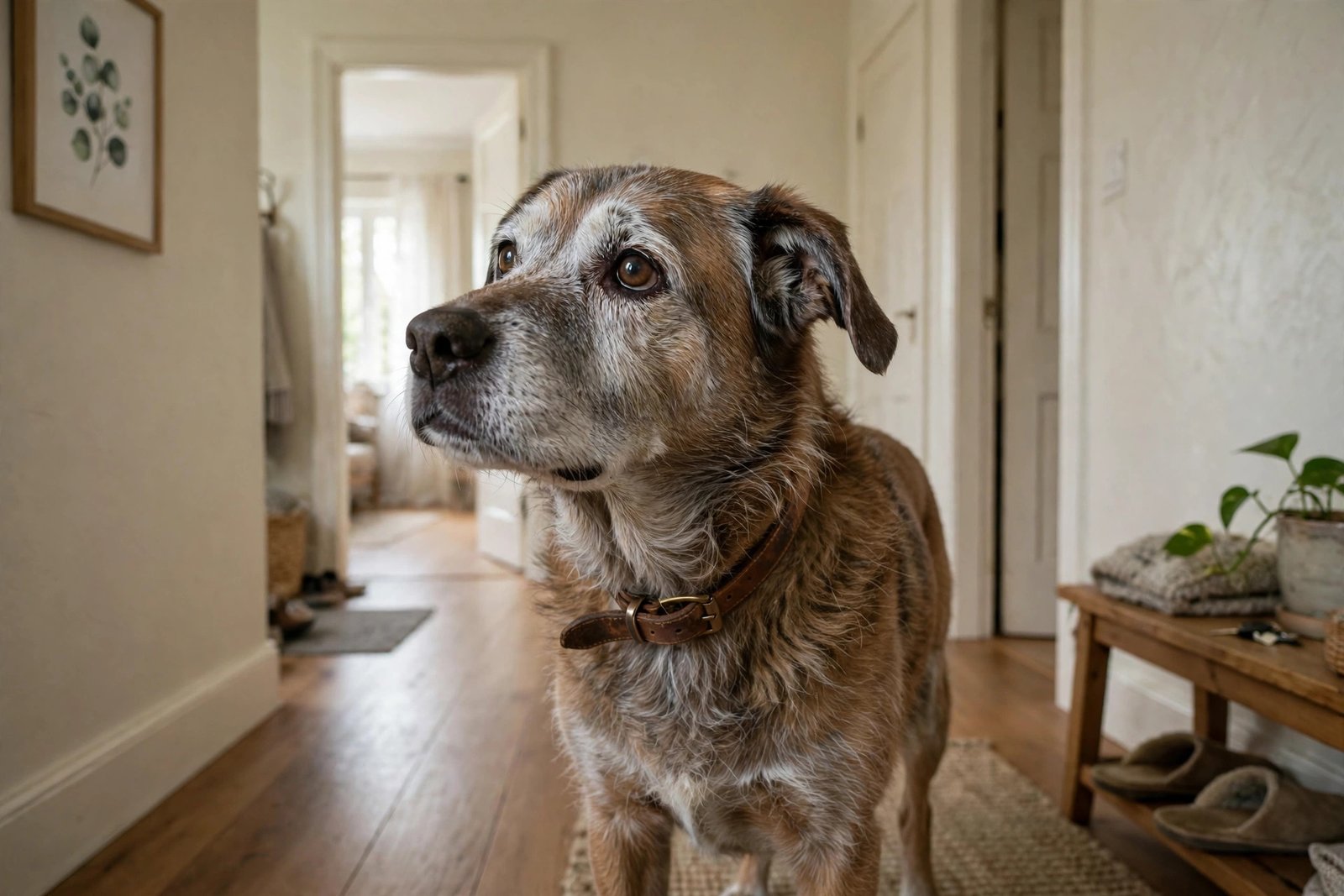
Medications and Treatments: What Actually Helps
- Selegiline (Anipryl): the only FDA-approved drug for CCD. Boosts dopamine; helps roughly half of dogs noticeably, especially early. Takes 4–8 weeks to judge.
- Propentofylline: improves brain blood flow; used widely outside the US with good reports.
- Anti-anxiety support: trazodone or gabapentin for nighttime restlessness — ask your vet; a sleeping dog and a sleeping owner both matter.
- Cognitive diets: prescription diets (e.g., Hill’s b/d) with antioxidants, L-carnitine, omega-3s and MCTs — real clinical evidence behind these.
- Supplements: SAMe, omega-3 DHA, vitamin E, MCT oil — reasonable evidence, but discuss every one with your vet for interactions and dosing.
No single treatment is magic; the combination — started early — is what buys good months.
Daily Routine: The Foundation of Dementia Care
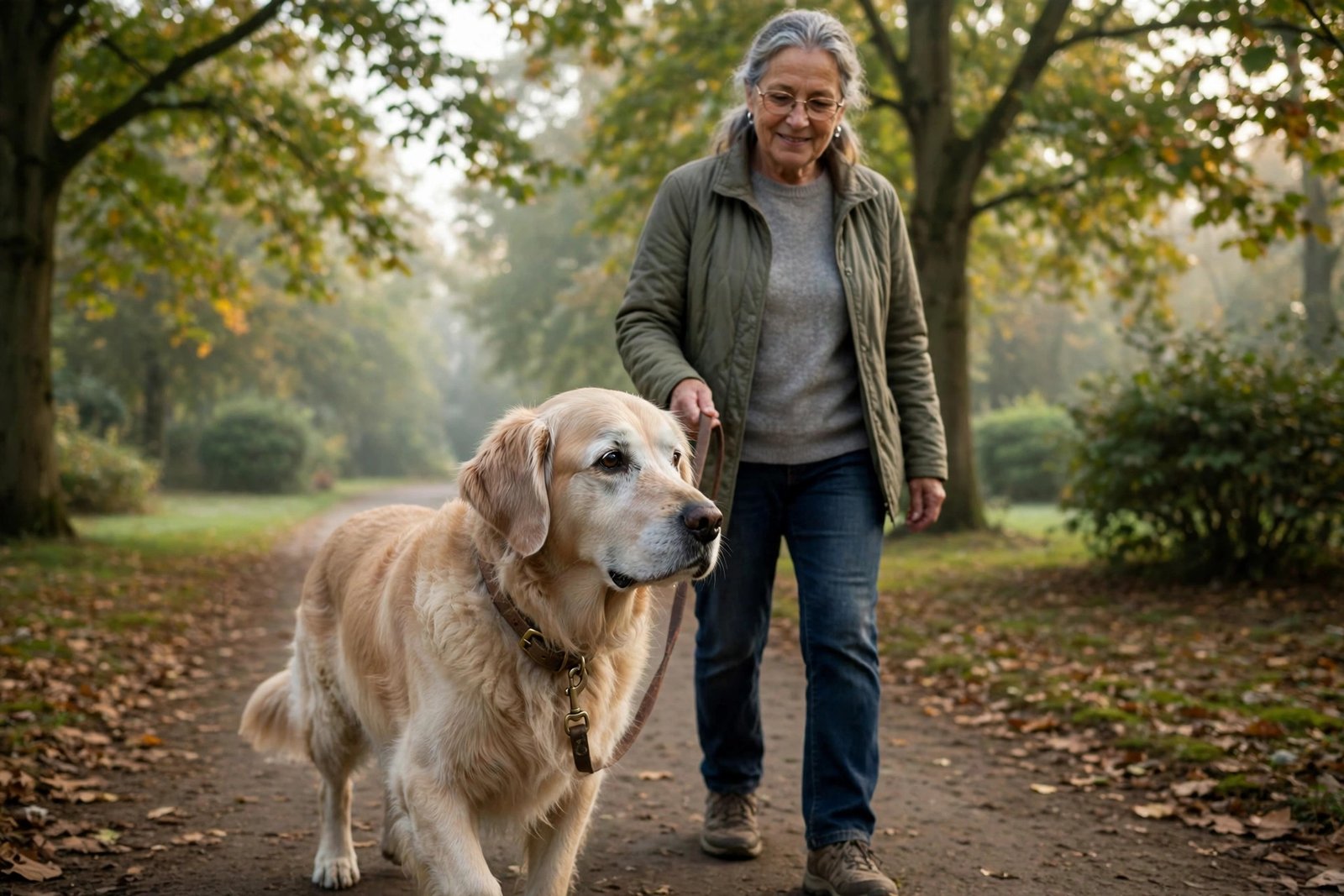
Predictability is medicine for a confused brain. Keep feeding, walks, play and bedtime at the same times daily — set phone alarms if you must. Keep furniture, bowls and beds in the same places — rearranging the living room can genuinely disorient a dog with CCD. Short, gentle walks on familiar routes beat long adventures now; sniffing is brain exercise, so let them sniff.
Home Adjustments That Help
- Nightlights in hallways, near water bowls and the yard door — disorientation worsens dramatically in the dark.
- Non-slip mats/runners on slick floors; ramps instead of stairs where possible. A confused dog who slips becomes a frightened dog.
- Block hazards: pools, steep drops, busy roads, open stairwells — a confused dog wanders without judgment.
- Consistent potty breaks: more frequent, on schedule (every 3–4 hours); washable pads without shame for accidents — never punish, it only adds fear to confusion.
- White noise or calm music for nighttime restlessness; some dogs settle remarkably with it.
- Scent markers: a dab of vanilla near the water bowl, lavender near the bed — smell survives when vision and memory fade.
The Sundowning Survival Guide (Evenings Are Hardest)
Like human dementia, CCD often worsens in the evening — pacing, whining, restlessness as light fades. Cope with it:
- Front-load the day: the main walk, play and enrichment before 4pm; evenings stay boring and predictable.
- Light therapy: keep the house bright until bedtime; darkness triggers the restlessness.
- Evening wind-down ritual: gentle grooming (soft brushing doubles as calming contact), a stuffed Kong, then bed in the same spot.
- Ask about nighttime medication: if pacing keeps everyone up, your vet can help — sleep deprivation hurts the dog and you.
Enrichment: Keep the Brain Engaged
Use-it-or-lose-it applies to dog brains too. Snuffle mats, easy puzzle feeders, short scent games (“find the treat” in plain sight), and brief training refreshers of old known cues all count. Keep sessions tiny (2–3 minutes), easy, and always ending in success — frustration helps nothing. Rotate toys weekly to keep novelty alive without overwhelming.
Nutrition for the Aging Brain
Ask your vet about cognitive-support diets rich in antioxidants, omega-3 DHA, L-carnitine and MCTs — there’s real clinical evidence they slow decline. Our homemade dog food guide includes a fish-and-oat recipe seniors do well on, but any diet change for a senior dog — especially one on medication — should be vet-approved first. Keep mealtimes sacred: same place, same time, same bowl.
Caring for the Caregiver: You Matter Too
Dementia care is a marathon, and caregiver fatigue is real and normal. Sleepless nights, house-soiling frustration, grief for the dog they were — it’s okay to feel all of it and still love them fiercely. Get help: dog sitters for breaks, family sharing night shifts, online CCD support groups where people get it. A burned-out caregiver can’t give good care — rest is part of the treatment plan, for both of you.
Quality of Life: The Hardest Part
Track good days vs. bad days in a notebook; trends are clearer on paper than in a worried head at 3am. Useful markers: eating willingly, recognizing you, enjoying touch, comfortable rest, more calm hours than distressed ones. When bad days consistently outnumber good, or your dog seems anxious more than content, or medical options are exhausted — have the honest quality-of-life conversation with your vet. Loving them sometimes means letting go, and that’s the final kindness, not a failure. You don’t have to decide alone, and you don’t have to decide today.
FAQs
Can dog dementia be treated?
It can’t be cured, but it can be managed. Selegiline, cognitive diets, enrichment, routine and sleep support together ease symptoms and often buy many more good months. Early treatment works dramatically better than late — don’t wait to mention symptoms.
How fast does dog dementia progress?
It varies enormously — months to years. Some dogs plateau for long stretches; others decline steadily. Regular vet check-ins (every 3–6 months) let you adjust the plan as things change. Tracking DISHA signs monthly shows the real trend.
Should I punish my senior dog for house soiling?
Never. A dog with dementia who has an accident is confused, not disobedient. Punishment increases anxiety and confusion and can make soiling worse. More frequent scheduled outings, easy yard access, and washable protection are the answer.
Do supplements help dog dementia?
Some have reasonable evidence (SAMe, omega-3 DHA, antioxidants, MCTs, vitamin E) — but “reasonable evidence” isn’t a prescription. Discuss every supplement with your vet; interactions and dosing matter, especially alongside medications like selegiline.
Why is my senior dog restless at night?
Likely sundowning — the sleep-wake cycle disruption of CCD. See the survival guide above: bright evenings, front-loaded activity, wind-down ritual, and ask your vet about nighttime support if it’s severe. Rule out pain and needing to urinate first.
How do I know when it’s time to say goodbye?
Vets often suggest tracking: eating, mobility, comfort, recognition, joy, and anxiety. When suffering outweighs good moments most days — and medical options are exhausted — it’s time for the kindest conversation. Your vet can guide you with quality-of-life scales; you don’t have to decide alone.
Can dementia be prevented in dogs?
Not guaranteed, but lifelong mental enrichment, physical exercise, omega-3-rich nutrition, and maintaining a healthy weight are all associated with slower cognitive decline. Start in middle age — brain health is built over a lifetime, not in a crisis.