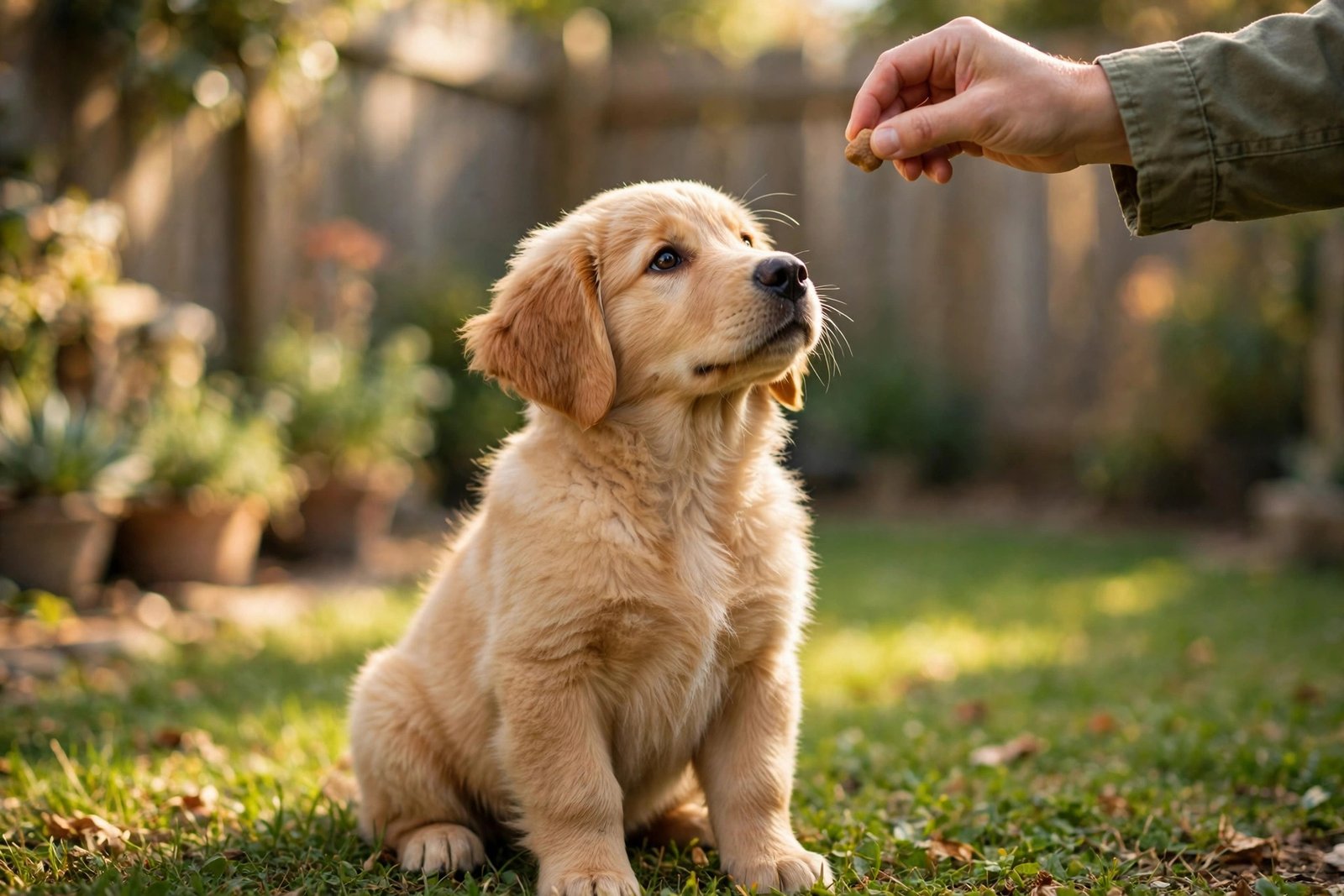
Bringing home a puppy is pure joy — and pure chaos. A puppy training schedule by age takes the guesswork out of those first months: it tells you exactly what to teach at 8 weeks, 12 weeks, 6 months and beyond, so your puppy grows into a calm, confident adult dog instead of a furry tornado.
This guide gives you a complete week-by-week training schedule by age, covering potty training, crate training, basic commands, socialization, and the mistakes that derail most new owners. Follow it loosely — every puppy is an individual — but follow it.
Why a Puppy Training Schedule by Age Matters
Puppies have a critical learning window between roughly 3 and 14 weeks, when their brains absorb experiences faster than at any other time in life. What happens in this window shapes their confidence for years. A structured puppy training schedule makes sure you don’t waste it — and don’t overwhelm a baby brain with too much at once.
Miss the window and you’re not doomed — adult dogs learn beautifully — but you’ll work harder for every lesson. The schedule below front-loads the easy, high-value wins while your puppy’s brain is at its most sponge-like.
The golden rules of any puppy training schedule:
- Short sessions: 5–10 minutes, several times a day. Puppies tire fast.
- Positive only: reward what you like; ignore or redirect what you don’t. Punishment creates fear, not learning.
- Consistency beats intensity: the same rules from every family member, every day.
- End on a win: always finish a session with something your puppy can do well, followed by a jackpot reward.
The Science Behind the Schedule: Critical Periods
Understanding why the schedule is ordered this way helps you adapt it to your puppy. Canine development has distinct phases:
- 3–8 weeks (with breeder/litter): bite inhibition and dog-dog social skills. Good breeders start gentle handling here.
- 8–12 weeks (fear imprint period): frightening experiences now can scar for life. Keep everything positive and low-pressure.
- 8–16 weeks (socialization window): the golden window for exposures. After ~14–16 weeks it narrows sharply.
- 6–14 months (adolescence): the brain remodels; previously learned behaviors get “forgotten.” This is normal, not defiance.
The schedule below maps directly onto these phases — which is why the order matters more than the exact week.
Puppy Training Schedule: 8–10 Weeks (The Foundation)
Your puppy just left their littermates — everything is new and a little scary. Keep it gentle. The goals this fortnight are safety, comfort, and the very first habits.
- Name recognition: say their name cheerfully, reward any glance your way. Ten reps, twice a day.
- Potty training basics: outside every 1–2 hours, after every meal, nap and play session. Reward within 3 seconds of finishing — timing is everything.
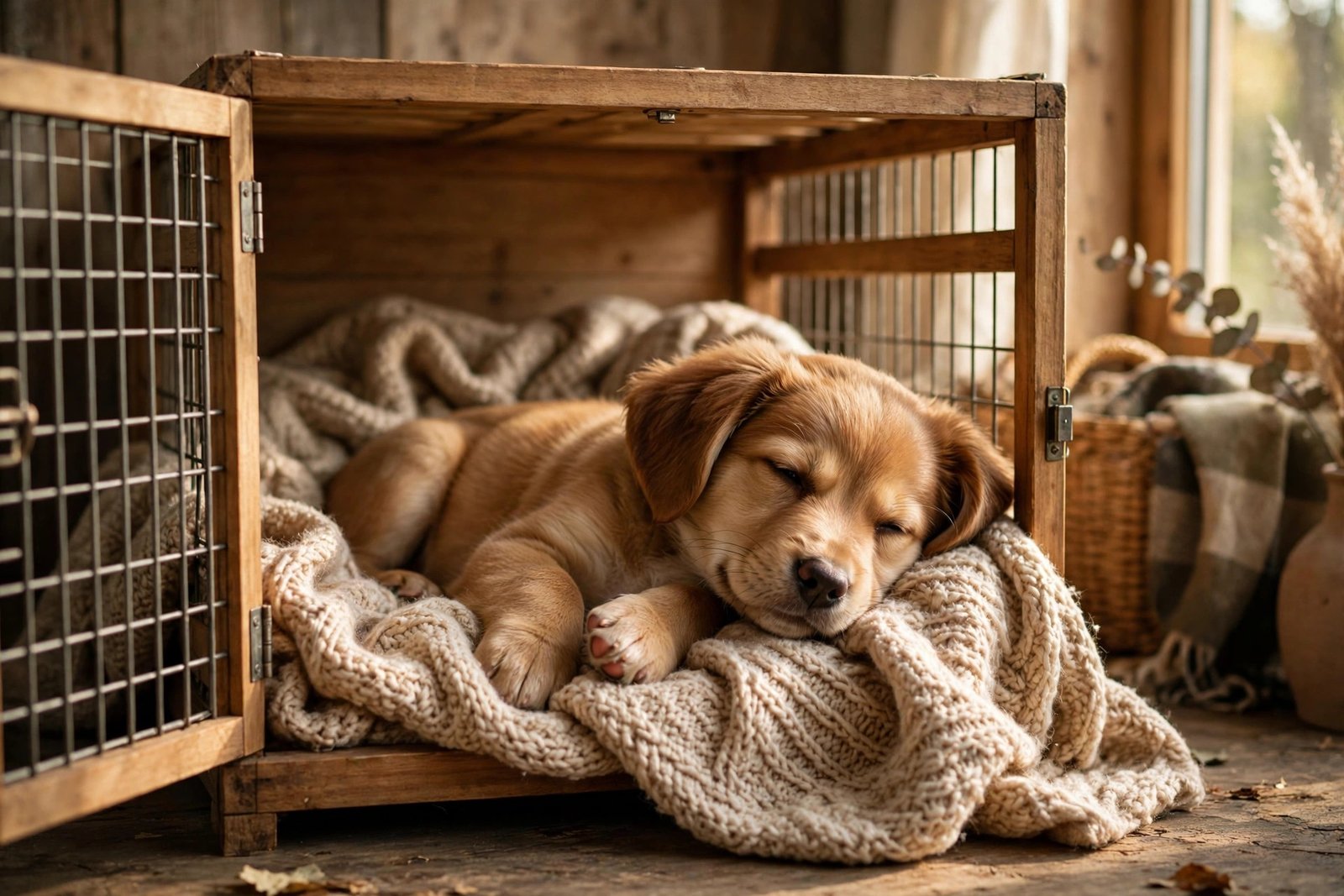
- Crate introduction: feed meals near the crate, toss treats inside, let them explore freely. Never use it as punishment. A crate done right becomes a bedroom, not a jail.
- Gentle handling: touch ears, paws, belly and mouth with treats — this pays off at every future vet visit and grooming session.
- Sound socialization: vacuum from another room, traffic sounds at low volume, thunderstorms on YouTube quietly. Pair every new sound with treats.
Puppy Training Schedule: 10–12 Weeks (First Skills)
- First commands: sit, then come. Lure with a treat, mark the instant their butt hits the floor, reward.
- Leash introduction: let them drag a light leash indoors under supervision before any real walks. Reward calm leash behavior.
- Bite inhibition: yelp or go still when teeth touch skin, then redirect to a toy. This is the critical window — it closes around 4–5 months.
- Alone training: leave the room for seconds, return before they fuss, build up gradually. (See our guide to reading your dog’s body language to spot stress early.)
- Trade games: offer a high-value treat in exchange for a toy. This single game prevents most future resource guarding.
Puppy Training Schedule: 3–4 Months (Building Reliability)
- Expand commands: down, stay (brief durations), leave it — the last one is a life-saver on walks.
- Potty reliability: most puppies manage 2–3 hours now. Keep the schedule — don’t test them by waiting for failure.
- Socialization window closing: positive exposures to traffic, crowds, children, and other vaccinated dogs. Quality beats quantity — one calm 10-minute outing beats an overwhelming hour.
- Greeting manners: reward four paws on the floor; jumping gets zero attention (turn away, wait, reward the sit).
- Settle on a mat: the most underrated skill. A dog who can lie calmly on a mat is welcome everywhere.
Puppy Training Schedule: 4–6 Months (The Long Game Begins)
- Longer sessions: 10–15 minutes. Start adding mild distractions — train in the garden, then the quiet street.
- Loose-leash walking: reward position at your side; the instant they pull, stop or change direction. Pulling must never work.
- Adolescence preview: selective hearing starts around 5–6 months. Stay patient — it’s developmental brain remodeling, not defiance.
- Proof the basics: practice sit/down/stay in three new locations per week.
Puppy Training Schedule: 6–12 Months (Adolescence Survival)
This is where most owners struggle — and where most dogs are surrendered. Your sweet puppy becomes a teenage hooligan: jumping, mouthing, ignoring recall, counter-surfing. It’s normal. The training you banked earlier is still in there; adolescence just puts it behind a firewall of hormones.
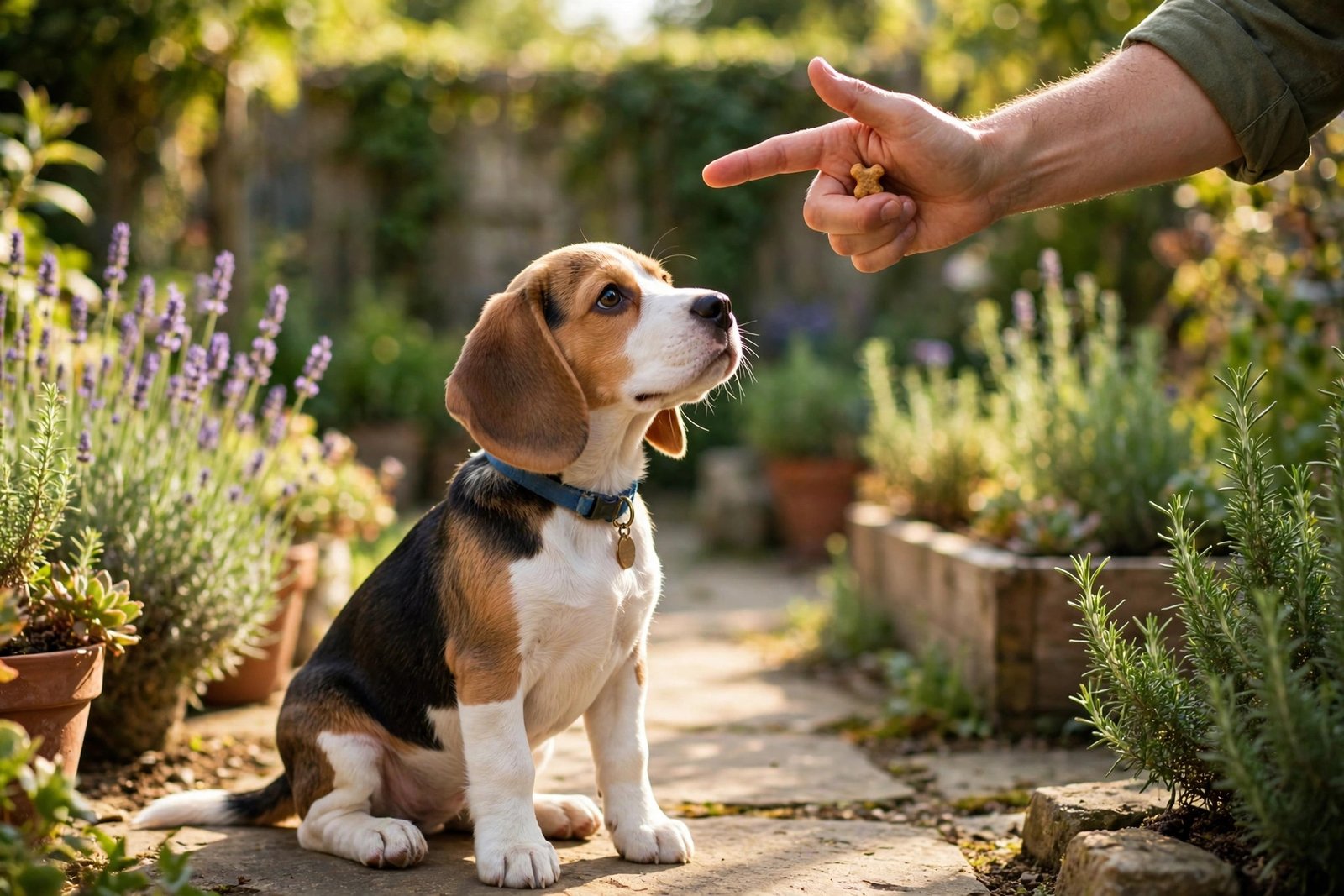
- Proof everything: practice known commands in parks, streets, around other dogs. A command isn’t learned until it works with distractions.
- Impulse control: wait at doors, wait for food, settle on a mat while you eat dinner.
- Recall: the most important safety skill — practice with the highest-value rewards you own, and never punish a slow recall (you’ll just teach them that coming back is dangerous).
- Management is training: use baby gates, leashes and crates to prevent rehearsal of bad behavior. Every prevented mistake is a lesson not unlearned.
Puppy Training Schedule: 1 Year and Beyond (Maintenance)
Training never truly ends — it just becomes maintenance. Keep a short daily session, teach a fun trick every few months, and your adult dog stays sharp and bonded to you. Dogs who “graduate” and never train again slowly get rusty, just like any skill.
If you adopted rather than bought, our first-time adoption guide covers the 3-3-3 adjustment rule that pairs perfectly with this schedule — adult rescues follow the same principles on a gentler timeline.
Training Methods Compared: What Actually Works
You’ll hear endless debates. Here’s the honest summary:
- Positive reinforcement (reward-based): the most evidence-backed method. Builds confidence, strengthens your bond, works for every breed. This is what this entire schedule uses.
- Balanced training (rewards + corrections): can suppress behavior fast, but risks fear, anxiety and fallout — especially in the fear imprint period. Not recommended for puppies.
- Dominance/”alpha” theory: debunked by the very scientist who proposed it. Dogs know you’re not a dog; what they need is a predictable teacher, not a pack leader.
When in doubt: if a method relies on your puppy being afraid of you, it’s the wrong method.
Essential Gear for the Training Year
- Treat pouch: worn on every walk. Rewards must be instant.
- Long line (5–10m): freedom with a safety net — the recall trainer’s best friend.
- Front-clip harness: kinder than collars for pullers, no choking.
- Kong / lick mat / snuffle mat: mental exercise that tires puppies faster than physical exercise.
- Crate + baby gates: management tools, not punishments.
Common Puppy Training Mistakes
- Training too long: a tired puppy learns nothing. Quit while you’re ahead — always end on a success.
- Inconsistent rules: if jumping is cute today and forbidden tomorrow, your puppy can’t win. Get the whole household aligned.
- Skipping socialization: you can’t make up the 3–14 week window later. This is the one deadline in puppy raising.
- Expecting adult reliability: a 4-month-old is a toddler. Judge accordingly.
- Training only at “training time”: every walk, meal and doorway is a lesson. The 5-minute sessions matter less than the 23 other hours.
When to Get Professional Help
A good trainer is a coach for you, not a fixer for your dog. Get help early if you see: persistent fearfulness, resource guarding that escalates, separation distress (not just whining — panic), or aggression of any kind. Look for certified professionals (CPDT-KA, IAABC) who use reward-based methods — and run from anyone who guarantees results or wants to “dominate” your puppy.
FAQs
What is the first thing you should train your puppy?
Name recognition and potty routine come first — before any command. A puppy who knows their name and where to pee is already ahead of the game. Sit can wait a week; the potty spot can’t.
What is the 3-3-3 rule for puppy training?
It’s actually an adoption guideline: 3 days to decompress, 3 weeks to learn routines, 3 months to feel at home. For training specifically, think in smaller loops: teach it, practice it, proof it — in that order, never skipping steps.
What is the hardest month with a puppy?
Most owners say months 3–5: the cute newborn phase is over, adolescence hasn’t hit, and biting, chewing and selective hearing all peak at once. Months 6–10 (adolescence) are a close second. It passes — the dog on the other side is worth it.
How many times a day should I train my puppy?
Three to five micro-sessions of 5–10 minutes for young puppies; two to three 15-minute sessions from 6 months. Plus training woven into daily life — every walk, meal and doorway is a lesson. Formal sessions are the tip of the iceberg.
When should I start socializing my puppy?
Immediately, from the day they come home — with care around unvaccinated dogs and high-traffic dog areas until vaccinations are complete. Carry them through busy places, invite calm visitors, and expose them to household life. Waiting until vaccinations are “done” wastes the entire window.
Is it too late to train my 1-year-old dog?
Not even close. Dogs learn at every age — the schedule’s early phases just happen faster in puppyhood. An untrained 1-year-old can absolutely learn everything here; expect each phase to take roughly twice as long and lean harder on management in the meantime.
Why does my puppy ignore me outside but listen indoors?
Because “sit in the kitchen” and “sit at the park” are different skills to a dog’s brain — they don’t generalize well. You haven’t lost the training; you just haven’t proofed it outdoors yet. Go back to easier rewards outside and rebuild gradually.